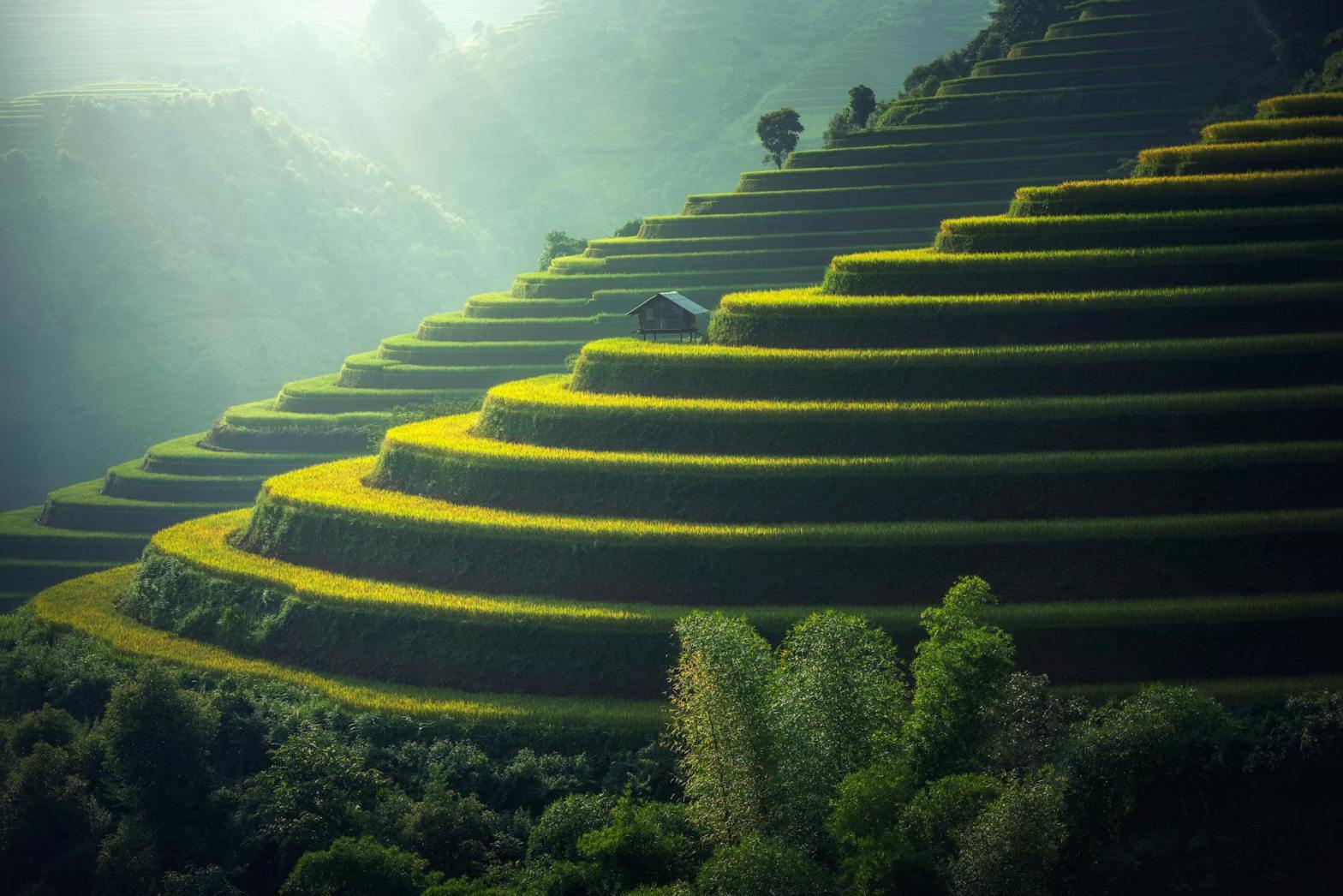
Landscape photography is one of the most awe-inspiring genres in the photographic arts. It allows photographers to capture the grandeur, tranquility, or even the raw intensity of the natural world. At its core, landscape photography is about telling a story of a place—its scale, mood, and beauty. A key to mastering this genre is using depth and perspective to transform flat, two-dimensional images into immersive scenes that pull the viewer into the frame.
In this guide, we’ll explore advanced techniques for using depth, perspective, composition, and lighting to elevate your landscape photography.
The Foundations of Landscape Photography
Before diving into creative techniques, let’s cover some basic principles that form the foundation of stunning landscape photography:
- Subject and Focal Point: Every great landscape image needs a point of interest—be it a mountain, tree, or winding path—to guide the viewer’s eye.
- Lighting: Natural light, particularly during the golden hour (just after sunrise or before sunset), plays a pivotal role in landscape photography.
- Patience: Great landscapes often require waiting for the perfect moment when the light, weather, and composition align.
Once these essentials are in place, you can begin experimenting with depth and perspective to bring your landscapes to life.
Creating Depth in Landscape Photography
Depth in photography is about making a flat image feel three-dimensional. By giving the viewer a sense of distance and scale, you can create more engaging and immersive photographs.
1. Foreground, Middleground, and Background
One of the simplest ways to create depth is by incorporating distinct layers into your composition:
- Foreground: Adds interest and anchors the scene. Rocks, flowers, or streams can serve as excellent foreground elements.
- Middleground: Often contains the main subject, like a mountain or a field.
- Background: Completes the composition with distant elements like the sky, clouds, or horizon.
Practical Tips:
- Use a wide-angle lens to exaggerate the spatial relationship between foreground and background elements.
- Position your camera low to the ground to emphasize the foreground.
2. Leading Lines
Leading lines are natural or man-made elements that guide the viewer’s eye through the photograph, creating a sense of depth and movement. Examples include:
- Roads, trails, or fences.
- Rivers, streams, or shorelines.
- Lines formed by shadows or patterns in the landscape.
How to Use Leading Lines:
- Align the lines to converge toward the main subject, directing the viewer’s attention.
- Experiment with diagonal or curving lines for a dynamic composition.
3. Layering with Atmosphere
Atmospheric elements like mist, fog, or haze can naturally separate layers in your landscape, adding depth and mood.
- Fog and Mist: Creates a sense of mystery and softens distant elements.
- Haze: Adds a gradual transition in tone and color, especially in mountain ranges.
Pro Tip:
Photograph during early morning or late evening when atmospheric effects are more pronounced.
4. Focus Techniques: Depth of Field
Depth of field (DoF) determines how much of your image is in sharp focus. In landscape photography, you often want a deep depth of field to keep everything from the foreground to the background sharp.
Achieving Maximum Depth of Field:
- Use a small aperture (f/8 to f/16) to increase the DoF.
- Focus about one-third of the way into the scene (hyperfocal distance) to maximize sharpness across the frame.
- Use a tripod to compensate for the slower shutter speeds required by small apertures.
Utilizing Perspective in Landscape Photography
Perspective is how objects appear in relation to one another. Playing with perspective can dramatically alter the impact of your landscape photographs.
1. Wide-Angle Perspective
Wide-angle lenses exaggerate the scale and distance between objects, making foreground elements appear larger and more prominent. This technique works well when you want to emphasize intricate details in the foreground.
Techniques for Wide-Angle Landscapes:
- Move closer to foreground objects to fill the frame.
- Ensure the foreground elements are visually interesting, as they will dominate the scene.
2. Compressed Perspective
Telephoto lenses compress the distance between objects, making distant mountains or trees appear closer together. This technique is excellent for isolating specific parts of the landscape and creating a more intimate feel.
When to Use Compressed Perspective:
- Highlight layers in the landscape, such as ridges or waves.
- Create a sense of scale by juxtaposing large and small elements.
3. Point of View (POV)
Changing your camera’s position can significantly affect perspective and add variety to your landscapes.
Creative POV Ideas:
- Low Angle: Place your camera near the ground to emphasize textures in the foreground.
- High Angle: Climb to a higher vantage point to showcase the vastness of the scene.
- Tilted Frame: Slightly tilting the camera can create dynamic, unconventional compositions.
Mastering Composition for Impactful Landscapes
Composition is the backbone of compelling landscape photography. By thoughtfully arranging elements in the frame, you can create harmony and balance.
1. The Rule of Thirds
Divide your frame into nine equal parts using two horizontal and two vertical lines. Place key elements (horizons, mountains, or trees) along these lines or at their intersections.
2. Golden Ratio
The golden ratio is a more advanced compositional technique that uses a spiral or grid to position elements in a naturally pleasing way.
3. Framing
Use natural elements like archways, tree branches, or cave openings to frame the scene. This draws the viewer’s attention and adds depth.
4. Negative Space
Leave empty areas in the frame to create a sense of simplicity and scale. A vast sky or an open field can evoke feelings of freedom and solitude.
Harnessing Light for Landscape Photography
Lighting is arguably the most critical factor in landscape photography. The right light can transform an ordinary scene into something extraordinary.
1. Golden Hour and Blue Hour
- Golden Hour: Offers soft, warm light that enhances textures and colors.
- Blue Hour: The period just before sunrise or after sunset, when the sky takes on a deep blue hue.
2. Backlighting
Photographing with the sun behind your subject can create stunning silhouettes or rim lighting on trees, leaves, or mountains.
3. Side Lighting
Side lighting adds depth and dimension by casting long shadows across the landscape.
Advanced Techniques for Landscape Photography
1. Long Exposures
Use long exposure settings to capture motion, such as flowing water, moving clouds, or star trails.
- Use a neutral density (ND) filter to reduce light and allow for longer shutter speeds during the day.
- Keep the camera steady with a tripod to prevent unwanted blur.
2. Panoramas
For expansive landscapes, stitch multiple images together to create a panoramic photograph. This is especially useful for scenes with wide vistas or dramatic skylines.
3. HDR Photography
High Dynamic Range (HDR) photography involves combining multiple exposures to balance highlights and shadows, particularly in high-contrast scenes.
Post-Processing for Depth and Perspective
Editing plays a vital role in fine-tuning your landscape images.
1. Enhancing Depth
- Adjust contrast and clarity selectively to emphasize layers in the scene.
- Use gradients to darken the sky and add dimension to the image.
2. Perspective Corrections
- Straighten horizons and correct lens distortions for a polished look.
3. Color Grading
- Warm tones can enhance sunsets, while cool tones work well for serene, moody landscapes.
Conclusion
Landscape photography is both a technical and artistic endeavor. By mastering depth and perspective, you can elevate your work from simply documenting a scene to creating breathtaking images that evoke emotion and wonder. Experiment with composition, lighting, and advanced techniques to develop your unique style and capture the beauty of the world around you.
Remember, the most important element in landscape photography is your connection to the scene. Let that passion guide your creativity, and the results will shine in your photographs.
 Learning Digital Photography