Aperture

Understanding Aperture in Photography

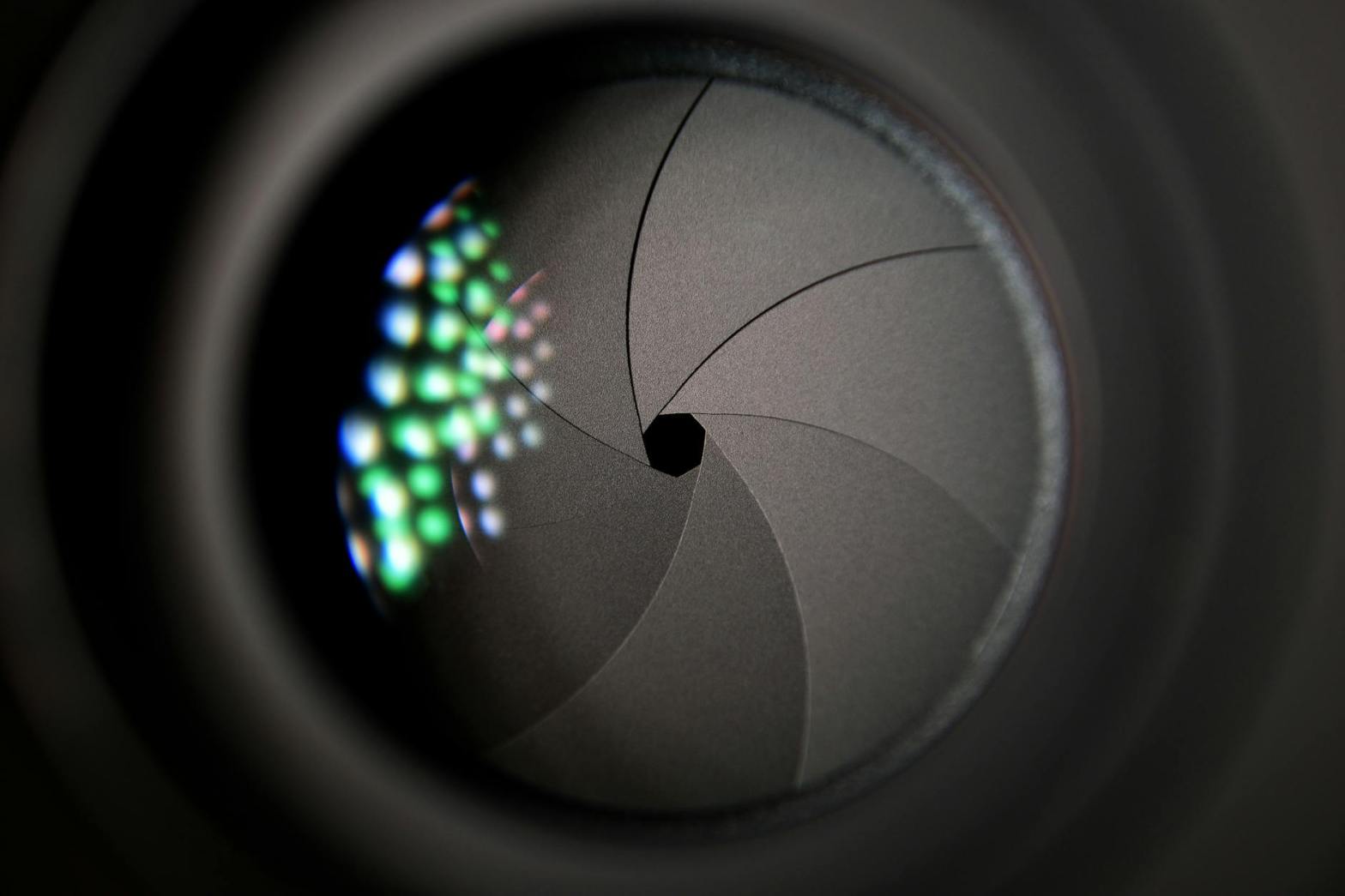
Aperture is a crucial element of photography that directly influences exposure and depth of field. It refers to the adjustable opening in a camera lens through which light passes to reach the sensor. By controlling aperture size, photographers can manipulate brightness and focus, enabling creative and technical control over their images.

Key Concepts

F-Stop Numbers

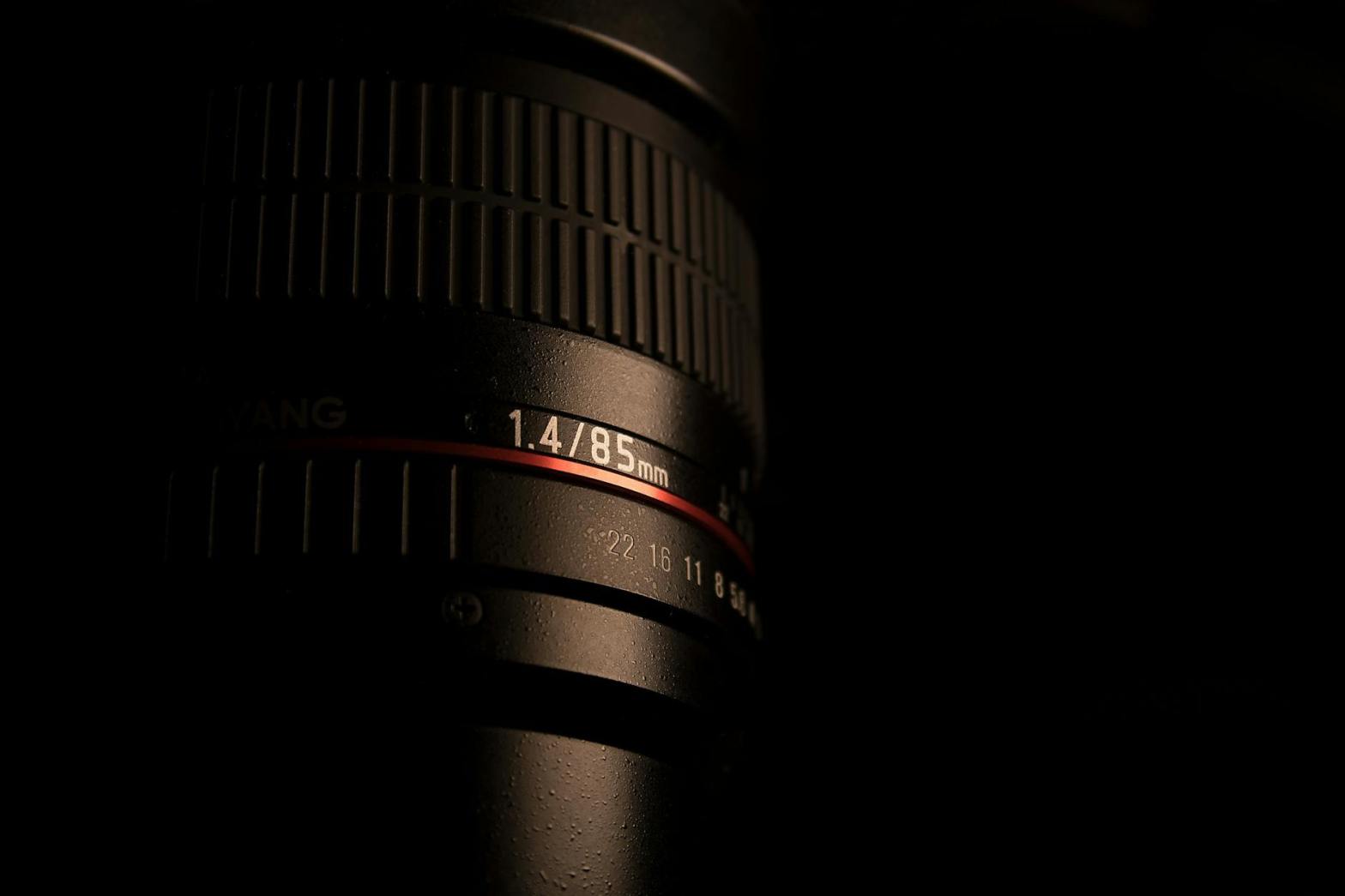
Aperture is measured in f-stops (e.g., f/1.4, f/2.8, f/5.6, f/11), which indicate the size of the lens opening:

  • Smaller f-stop numbers (e.g., f/1.4, f/2.8): Represent larger apertures, allowing more light to enter. This is useful in low-light conditions and for achieving a shallow depth of field.
  • Larger f-stop numbers (e.g., f/8, f/11, f/16): Represent smaller apertures, allowing less light in. These settings are ideal for landscape photography, where a greater depth of field is desired.

Depth of Field

Aperture size significantly impacts the depth of field (DoF), which determines how much of an image remains in focus:

  • Wide apertures (small f-stop, e.g., f/1.8): Create a shallow depth of field, making the subject stand out by blurring the background. This effect is commonly used in portrait photography.
  • Narrow apertures (large f-stop, e.g., f/11, f/16): Increase depth of field, ensuring that more of the scene remains sharp and in focus. This is ideal for landscapes and architectural photography.

Practical Applications of Aperture

Portrait Photography

  • Use a wide aperture (e.g., f/1.4 – f/2.8) to isolate the subject from the background, creating a professional and artistic bokeh effect.
  • Ensuring eye sharpness: When using very large apertures, focus on the subject’s eyes to maintain sharpness where it matters most.

Landscape Photography

  • Use a narrow aperture (e.g., f/11 – f/16) to ensure that both foreground and background elements remain sharp.
  • Hyperfocal distance: Understanding this concept allows photographers to maximize depth of field while avoiding diffraction issues at very high f-stops.

Macro Photography

  • Balancing depth of field and light: Since macro photography involves close-up subjects, depth of field becomes extremely shallow at wide apertures. A narrow aperture (e.g., f/8 – f/16) is often used to keep more of the subject in focus.
  • Focus stacking: Sometimes required when a narrow aperture alone does not provide sufficient depth of field.

Night and Low-Light Photography

  • Use a wide aperture (e.g., f/1.4 – f/2.8) to allow as much light as possible onto the sensor, reducing the need for high ISO settings and minimizing noise.
  • Trade-off between light and focus: A wider aperture gathers more light but reduces the depth of field, requiring careful subject placement.

Challenges and Considerations

Light Control

  • Overexposure risks: In bright conditions, a wide aperture may allow too much light, leading to overexposed images. Solutions include:
    • ND Filters: Neutral density filters reduce the amount of light entering the lens without affecting colors.
    • Faster Shutter Speed: A quicker shutter speed compensates for increased light intake.
    • Lower ISO: Reducing ISO helps balance exposure while maintaining image quality.

Lens Limitations

  • Maximum and minimum apertures: Not all lenses can achieve extremely wide (e.g., f/1.2) or narrow (e.g., f/22) apertures. Prime lenses typically offer wider maximum apertures compared to zoom lenses.
  • Lens quality and sharpness: Some lenses exhibit softness at their widest apertures or diffraction at their narrowest apertures. Understanding a lens’s optimal aperture (often between f/4 and f/8) helps achieve the best image quality.

Creative Uses of Aperture

  • Silhouettes: Using a narrow aperture combined with correct exposure settings can create strong, well-defined silhouettes.
  • Starburst Effect: Achieved by using very narrow apertures (e.g., f/16 – f/22) when photographing bright points of light, such as streetlights or the sun.
  • Intentional Blur and Bokeh Shapes: Specialized techniques, such as using shaped bokeh filters, can enhance creative expression.

Conclusion

Aperture is a fundamental aspect of photography that affects both technical quality and artistic style. Mastering its control allows photographers to adapt to different lighting conditions, enhance subject isolation, and create striking visual effects. By experimenting with different f-stops and understanding their impact, photographers can unlock new creative possibilities and refine their skills for any photographic scenario.
Filters

Filters in Photography

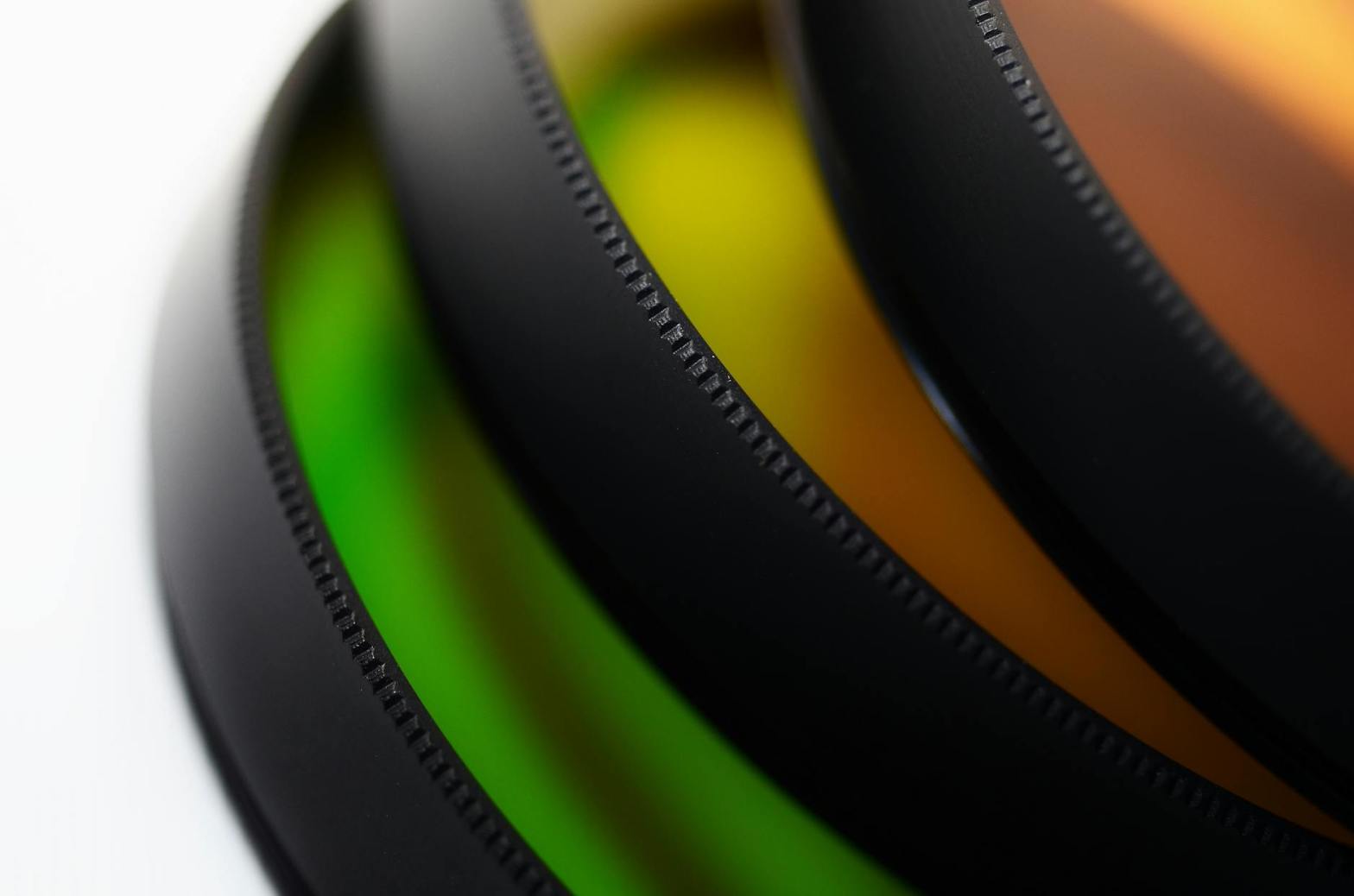
Filters are essential tools in photography that help control light, enhance colors, and protect your lenses. They can improve image quality, create special effects, and enable photographers to shoot in challenging lighting conditions. Whether you are a beginner or a professional, understanding the different types of filters and their uses will help you achieve better results in your photography.

Common Filter Types

UV Filters

UV filters were originally designed to reduce the effects of ultraviolet light on film photography, preventing hazy or bluish images. While modern digital sensors are less affected by UV light, UV filters are still widely used for lens protection.

Features and Benefits:

  • Protects the front element of your lens from scratches, dust, and moisture
  • Minimizes atmospheric haze in certain conditions
  • Thin and lightweight, making them easy to leave on the lens permanently

Best For:

  • General protection of camera lenses
  • Outdoor photography to reduce atmospheric haze
  • Situations where lens cleaning may be difficult or frequent

Polarizing Filters

Polarizing filters are among the most popular filters in photography due to their ability to manage reflections and enhance color saturation.

Features and Benefits:

  • Reduces glare and reflections from non-metallic surfaces (e.g., water, glass, and foliage)
  • Enhances color saturation, making skies appear deeper blue and foliage more vibrant
  • Improves contrast in landscape photography

Best For:

  • Landscape photography to deepen blue skies and enhance clouds
  • Water photography to reduce glare and see beneath the surface
  • Shooting through windows or glass to minimize reflections

Neutral Density (ND) Filters

Neutral Density (ND) filters reduce the amount of light entering the lens without affecting color balance. They allow photographers to use slower shutter speeds or wider apertures in bright conditions.

Features and Benefits:

  • Enables long-exposure effects, such as silky smooth waterfalls or blurred motion in crowds
  • Helps achieve a shallow depth of field in bright conditions by allowing wider apertures
  • Available in various strengths (e.g., ND2, ND4, ND8, ND1000) to control different levels of light reduction

Best For:

  • Long-exposure photography to capture motion blur
  • Portrait photography in bright daylight to maintain a shallow depth of field
  • Videography to maintain cinematic motion blur under strong lighting

Graduated Neutral Density (GND) Filters

Graduated Neutral Density filters are a variation of ND filters, featuring a gradual transition from dark to clear. They are commonly used in landscape photography.

Features and Benefits:

  • Balances exposure between bright skies and darker foregrounds
  • Available in hard or soft gradients for different horizon lines
  • Enhances dynamic range in landscape photography

Best For:

  • Landscape photography to properly expose both sky and land
  • Sunset or sunrise photography to balance bright and dark areas

Color Filters

Color filters adjust the color balance of an image and are mostly used in black-and-white photography or creative shooting.

Features and Benefits:

  • Red filters enhance contrast in black-and-white photography, making skies darker
  • Blue filters can add a cool tone to images
  • Creative effects can be achieved by introducing different colors into an image

Best For:

  • Black-and-white photography to improve contrast
  • Artistic photography for unique color effects

Infrared (IR) Filters

Infrared filters block visible light and allow only infrared light to reach the camera sensor, creating surreal and dreamlike effects.

Features and Benefits:

  • Produces striking, otherworldly images with white foliage and dark skies
  • Helps create unique artistic effects in digital photography
  • Requires long exposures and careful post-processing

Best For:

  • Experimental and creative photography
  • Capturing surreal landscapes and unique portraits

Close-Up (Macro) Filters

Close-up filters function like magnifying glasses, allowing photographers to focus on small subjects without needing a dedicated macro lens.

Features and Benefits:

  • Affordable alternative to macro lenses
  • Easy to attach and remove
  • Available in different magnification strengths (+1, +2, +4, etc.)

Best For:

  • Macro photography of flowers, insects, and small objects
  • Budget-conscious photographers who want to explore close-up photography

Choosing Filters

Selecting the right filter depends on your photography style and needs. Here are some key factors to consider:

Quality Matters

Investing in high-quality filters ensures minimal impact on image sharpness and color accuracy. Cheap filters can degrade image quality by introducing unwanted reflections, color casts, or vignetting.

Compatibility with Lens Diameter

Filters are available in different thread sizes to match the diameter of your lens. Check your lens specifications to find the correct size, or use step-up rings to adapt filters to multiple lenses.

Coating and Construction

Look for multi-coated filters to reduce reflections and flare. High-end filters often have water-resistant, anti-scratch coatings for added durability.

Screw-On vs. Square Filters

  • Screw-on filters attach directly to the lens thread and are convenient for everyday use.
  • Square filter systems require a holder but allow more flexibility, as multiple filters can be stacked and adjusted.

Using Filters Effectively

To maximize the benefits of filters, keep these tips in mind:

  • Avoid overuse of filters: While filters can enhance your images, excessive stacking can lead to vignetting and loss of sharpness.
  • Keep filters clean: Smudges and dust can impact image quality, so regularly clean filters with a microfiber cloth.
  • Use filters with purpose: Understanding the effect of each filter will help you use them effectively to enhance your photography.

Conclusion

Filters are powerful tools that can significantly enhance your photography by controlling light, improving color, and adding creative effects. From UV protection to polarizing and ND filters, choosing the right one for your needs will help you achieve your desired results. Investing in quality filters and using them effectively will elevate your photography and open new creative possibilities.

Camera Bags

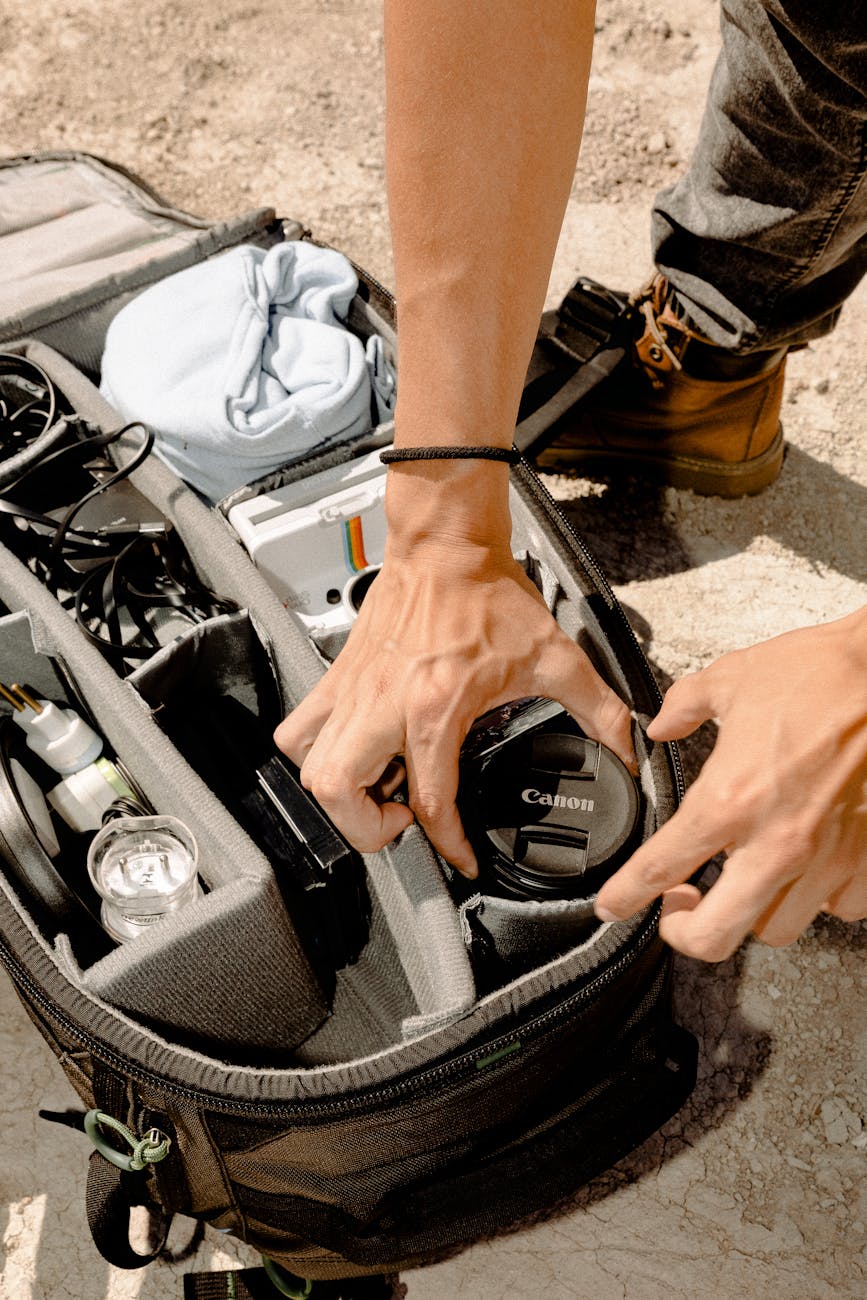
A reliable camera bag is essential for protecting your gear, ensuring ease of transport, and providing quick access to your equipment when needed. Whether you are a professional photographer carrying multiple cameras and lenses or a hobbyist with a compact setup, selecting the right bag depends on your shooting style, the amount of gear you carry, and the level of protection required.

Popular Options

Backpacks

Camera backpacks are excellent for photographers who need to carry multiple lenses, accessories, and even a tripod over long distances. They distribute weight evenly across both shoulders, making them comfortable for extended use.

Features:

  • Padded compartments for multiple cameras and lenses
  • Adjustable dividers for customizable organization
  • Additional pockets for accessories such as memory cards, batteries, and filters
  • Tripod holders and external straps for extra gear
  • Water-resistant or weatherproof materials for outdoor shooting

Best For:

  • Landscape photographers who hike to remote locations
  • Travel photographers needing a hands-free carrying option
  • Event photographers requiring extra storage for accessories

Shoulder Bags

Shoulder bags provide quick access to your camera and lenses, making them ideal for street and event photography. They allow easy switching between gear without needing to remove the bag from your body.

Features:

  • Single shoulder strap for easy carrying
  • Quick-access flap for fast lens or camera swaps
  • Compact design suitable for urban environments
  • Padded compartments for protection
  • Adjustable dividers to organize equipment

Best For:

  • Street photographers who need to move quickly
  • Event photographers needing easy access to lenses and accessories
  • Photojournalists working in fast-paced environments

Sling Bags

Sling bags offer a hybrid design between backpacks and shoulder bags. They feature a single cross-body strap, allowing for easy rotation from back to front for quick gear access. They balance convenience and capacity, making them a versatile choice.

Features:

  • Cross-body strap for comfortable carrying
  • Quick side-access compartments
  • Adjustable dividers for organization
  • Lightweight design compared to backpacks
  • Padded sections for added protection

Best For:

  • Travel photographers needing quick access to gear
  • Street photographers who prefer a compact yet spacious option
  • Hobbyists and vloggers who carry a moderate amount of equipment

Hard Cases

Hard cases provide the highest level of protection for camera gear, making them a preferred choice for professional photographers traveling with expensive equipment. These cases are built to withstand extreme conditions, offering impact resistance and water protection.

Features:

  • Hard-shell exterior for impact protection
  • Foam inserts for secure equipment placement
  • Waterproof and dustproof seals
  • Lockable latches for security
  • Wheels and handles for easy transport

Best For:

  • Professional photographers traveling with high-end gear
  • Videographers needing secure storage for delicate equipment
  • Studio photographers transporting lighting and camera setups

Additional Considerations

Material and Durability

A camera bag’s material determines its durability, weight, and weather resistance. Common materials include:

  • Nylon: Lightweight and water-resistant, ideal for travel.
  • Canvas: Durable and stylish but heavier than synthetic materials.
  • Leather: Offers a premium look and durability but requires maintenance.
  • Hard Plastic: Provides maximum protection against shocks and impacts.

Size and Capacity

Choosing the right size depends on the number of cameras, lenses, and accessories you plan to carry. Consider:

  • Small bags: Best for compact cameras and a single lens.
  • Medium bags: Ideal for carrying a camera body with two or three lenses.
  • Large bags: Suitable for professional setups with multiple cameras, lenses, and accessories.

Comfort and Ergonomics

Comfort is crucial, especially for photographers who travel or shoot for extended periods. Look for:

  • Padded shoulder straps: Reduces strain on your shoulders and back.
  • Breathable back panels: Prevents overheating during long wear.
  • Adjustable straps: Helps distribute weight evenly for better support.

Security Features

Protecting your expensive gear from theft is essential, especially when traveling. Security features to consider include:

  • Lockable zippers: Prevent unauthorized access.
  • Hidden compartments: Provide discreet storage for valuables.
  • Anti-theft straps: Prevent slash-and-grab theft attempts.

Weather Protection

For outdoor and travel photographers, weather resistance is a key consideration. Features to look for:

  • Water-resistant coatings: Helps repel light rain and moisture.
  • Rain covers: Provide extra protection in heavy downpours.
  • Sealed zippers: Prevent water from seeping into compartments.

Versatility and Expandability

Many photographers need bags that can adapt to different shooting conditions. Look for:

  • Modular designs: Allow you to add or remove compartments.
  • Expandable compartments: Provide extra storage when needed.
  • Convertible designs: Some bags switch between backpack, sling, and shoulder configurations.

Choosing the Right Camera Bag for Your Needs

Selecting the best camera bag depends on your photography style and specific needs. Here are some recommendations based on different scenarios:

  • For Travel Photography: A lightweight, durable travel backpack with weatherproofing and security features.
  • For Street Photography: A compact shoulder or sling bag for quick access to your gear.
  • For Wildlife Photography: A large backpack with extra padding and multiple compartments.
  • For Studio and Professional Work: A hard case with foam inserts for maximum protection.
  • For Vlogging and Content Creation: A medium-sized sling bag with space for a camera, microphone, and small tripod.

Investing in a high-quality camera bag ensures that your equipment stays protected, organized, and easy to access. By considering factors such as size, material, security, and comfort, you can find the perfect camera bag that fits your photographic needs and enhances your shooting experience.

Tripods

Tripods

A tripod is an indispensable tool for stable and sharp images, especially in challenging lighting conditions. Whether you are capturing landscapes, shooting long-exposure photographs, or working in a studio, a reliable tripod can help eliminate camera shake and improve image quality. Understanding the different types of tripods and their features will help you choose the best one for your needs.

Types of Tripods

Full-Size Tripods

Full-size tripods provide the highest level of stability and versatility, making them ideal for a wide range of photography applications. These tripods are well-suited for landscape photography, portrait work, and studio shoots where a steady platform is essential.

Features:

  • Extendable legs with multiple locking sections
  • Adjustable center column for precise height adjustments
  • Sturdy construction to support heavy camera setups

Best For:

  • Landscape photography
  • Portrait photography
  • Studio photography
  • Long-exposure shots

Travel Tripods

Travel tripods are designed for photographers who need a compact and lightweight solution. They are ideal for travelers, hikers, and street photographers who require portability without sacrificing stability.

Features:

  • Collapsible legs for easy packing
  • Lightweight materials such as carbon fiber or aluminum
  • Quick setup mechanisms

Best For:

  • Travel photography
  • Outdoor adventures
  • Street photography
  • Lightweight camera setups

Mini Tripods

Mini tripods are small, highly portable, and perfect for tabletop photography or situations where a full-size tripod is impractical. They work well for vlogging, macro photography, and supporting smaller cameras and smartphones.

Features:

  • Compact size for convenience
  • Adjustable legs for flexible positioning
  • Lightweight and easy to carry

Best For:

  • Tabletop photography
  • Vlogging and content creation
  • Macro photography
  • Smartphone and compact camera support

Key Features to Look For

When selecting a tripod, consider the following key features to ensure it meets your photography needs:

Material

The material of a tripod affects its weight, durability, and stability.

  • Aluminum: Affordable and durable but heavier than carbon fiber.
  • Carbon Fiber: Lightweight and sturdy, making it ideal for travel and outdoor use.

Height

A tripod’s height is an important factor, as it should be adjustable to accommodate different shooting scenarios. Look for a tripod that allows comfortable use at eye level while also being able to extend for overhead shots or collapse for low-angle perspectives.

Load Capacity

Ensure the tripod can support your camera and heaviest lens to avoid instability. Check the manufacturer’s specifications for maximum load capacity.

Leg Lock Mechanisms

Tripod legs come with different locking mechanisms:

  • Twist locks: Require rotation to secure and unlock; they offer a sleek design and strong hold.
  • Flip locks: Easy to use and quick to adjust, making them great for rapid setup.

Tripod Head Types

The tripod head is the component that connects the camera to the tripod. Different types offer varying levels of control and flexibility:

  • Ball Head: Allows for quick adjustments and smooth movement.
  • Pan-and-Tilt Head: Provides precise control with separate handles for horizontal and vertical adjustments.
  • Gimbal Head: Ideal for tracking moving subjects, often used in wildlife and sports photography.
  • Fluid Head: Designed for smooth motion in videography.

Center Column

Some tripods feature a center column that can be extended for additional height. A reversible center column is useful for macro photography, allowing the camera to be positioned closer to the ground.

Feet and Stability

Tripod feet come in different designs for various terrains:

  • Rubber feet: Provide grip on smooth surfaces.
  • Spiked feet: Offer stability on rough or slippery terrain.
  • Interchangeable feet: Allow for adaptability across different environments.

Portability

For travel and outdoor photography, a tripod should be lightweight and easy to carry. Some tripods have foldable legs or come with carrying cases for added convenience.

Choosing the Right Tripod for Your Needs

When selecting a tripod, consider the type of photography you do most often and balance factors such as weight, stability, height, and budget. Here are some recommendations based on different photography styles:

  • Landscape and Studio Photography: A full-size tripod with a sturdy build and high load capacity.
  • Travel and Outdoor Photography: A lightweight travel tripod with compact folding capabilities.
  • Macro and Tabletop Photography: A mini tripod with flexible positioning options.
  • Videography and Motion Tracking: A fluid head or gimbal head tripod for smooth motion.

Investing in a quality tripod will enhance your photography by ensuring sharper images and greater creative control. Understanding the different types and features will help you find the perfect tripod for your needs.

Camera Lenses

The lens you choose is one of the most important factors in determining the quality, composition, and overall look of your photographs. While the camera body plays a role in settings and processing, it is the lens that controls what and how you capture the scene in front of you. Lenses affect image sharpness, depth of field, and field of view, and each type is designed to cater to different photographic needs.

Understanding the different types of lenses and their uses will help you make informed decisions about which ones best suit your photography style. Below, we explore the primary categories of lenses, their features, advantages, and best use cases.

Prime Lenses

Features:

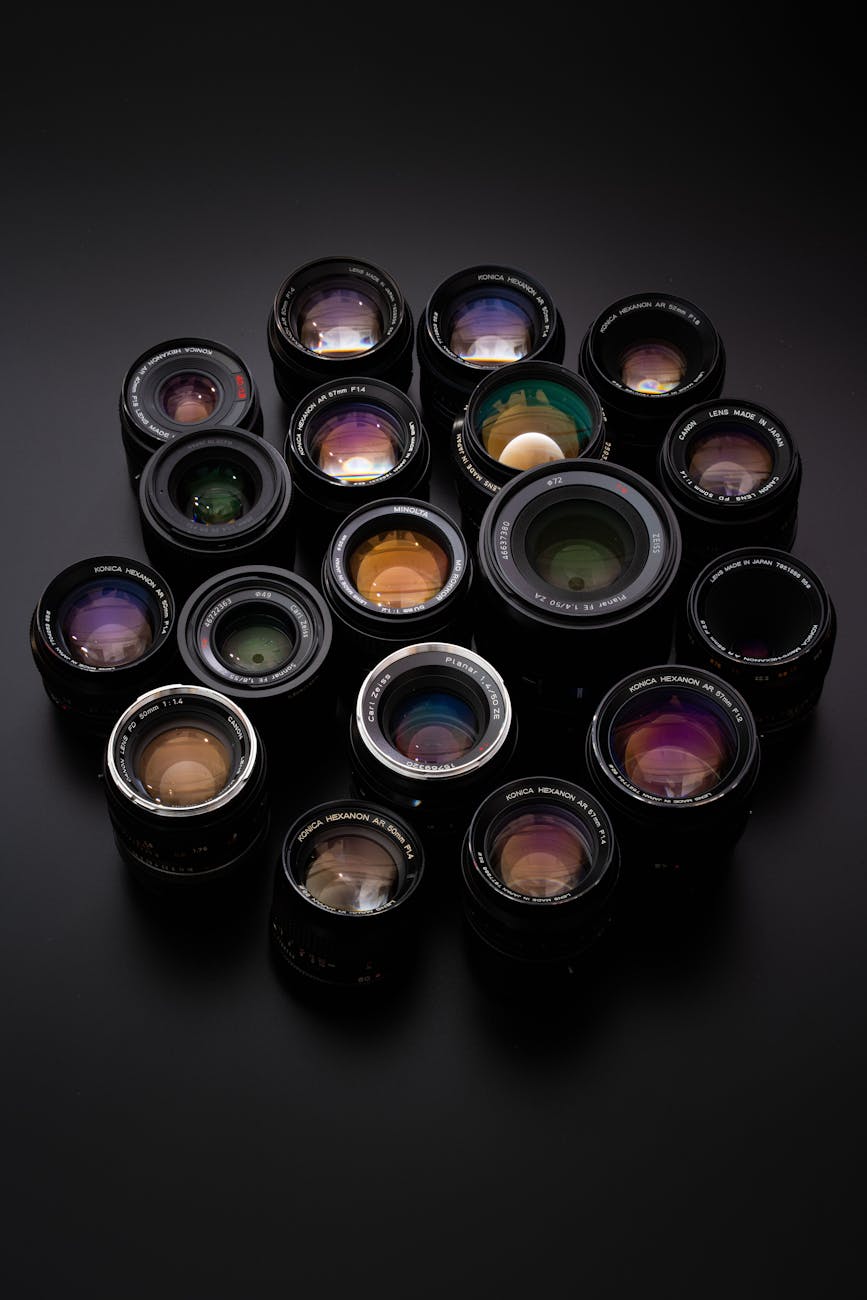
  • Fixed focal length (e.g., 35mm, 50mm, 85mm, 135mm)
  • Typically have wider apertures (e.g., f/1.8, f/1.4, f/1.2)
  • Often superior in sharpness and optical quality compared to zoom lenses

Best For:

  • Portrait photography
  • Low-light conditions
  • Street and documentary photography
  • Creative depth-of-field effects

Advantages:

  • Superior image quality: Because prime lenses have fewer moving parts and a simpler optical structure, they tend to produce sharper images with better contrast and minimal distortion.
  • Faster apertures: The wider apertures available in prime lenses allow for better performance in low light and greater control over depth of field, enabling stunning bokeh (blurred background effects).
  • Lightweight and compact: Prime lenses are generally smaller and lighter than zoom lenses, making them easy to carry and handle.

Popular Prime Lenses and Their Uses:

  • 35mm f/1.8 or f/1.4: Excellent for street and environmental portrait photography. It provides a natural field of view, similar to the human eye.
  • 50mm f/1.8 or f/1.4 (Nifty Fifty): A versatile lens that works well for portraits, everyday photography, and low-light situations.
  • 85mm f/1.4 or f/1.8: Ideal for portraiture due to its flattering perspective and ability to create a creamy background blur.
  • 135mm f/2: Favored by portrait photographers for its stunning subject isolation and beautiful background compression.

Zoom Lenses

Features:

  • Variable focal lengths (e.g., 24-70mm, 70-200mm, 18-135mm)
  • Flexible composition options without the need to change lenses
  • Slightly larger and heavier compared to prime lenses

Best For:

  • Travel photography
  • Event photography (weddings, concerts, journalism)
  • Sports and wildlife photography
  • Everyday versatility

Advantages:

  • Versatility: A zoom lens can cover multiple focal lengths, reducing the need to carry multiple prime lenses.
  • Convenience: Great for dynamic environments where changing lenses frequently isn’t feasible.
  • Composition flexibility: Allows quick framing adjustments without physically moving closer or farther from the subject.

Popular Zoom Lenses and Their Uses:

  • 24-70mm f/2.8: A favorite among professionals for its wide-to-short-telephoto range, excellent for landscapes, portraits, and events.
  • 70-200mm f/2.8: Popular for sports, wildlife, and portrait photography, offering great reach and subject compression.
  • 18-135mm f/3.5-5.6: A versatile all-in-one zoom lens, perfect for beginners or travel photographers who want a single lens solution.
  • 100-400mm f/4.5-5.6: Great for wildlife and sports, offering a long reach with reasonable portability.

Specialty Lenses

Macro Lenses

Features:

  • Designed for extreme close-ups with a high reproduction ratio (typically 1:1)
  • Fixed focal lengths (e.g., 60mm, 90mm, 100mm, 105mm, 180mm)
  • Exceptional sharpness and detail

Best For:

  • Close-up photography of insects, flowers, jewelry, and textures
  • Scientific and medical photography
  • Product photography

Advantages:

  • Unparalleled detail and sharpness
  • Ability to capture subjects at life-size magnification (1:1 ratio)
  • Often feature high-quality optics and coatings for minimizing chromatic aberrations

Popular Macro Lenses and Their Uses:

  • 60mm f/2.8 Macro: Good for general close-up photography with a shorter working distance.
  • 100mm f/2.8 Macro: A popular choice for insect photography due to a more comfortable working distance.
  • 180mm f/3.5 Macro: Offers even more distance from the subject, useful for photographing skittish insects.

Wide-Angle Lenses

Features:

  • Short focal lengths (e.g., 10-24mm, 14mm, 16-35mm)
  • Expands the field of view, allowing more of the scene to be captured
  • Some models have fisheye distortion for creative effects

Best For:

  • Landscape photography
  • Architecture and interior photography
  • Astrophotography

Advantages:

  • Captures expansive scenes with a dramatic perspective
  • Great for storytelling compositions in travel and documentary photography
  • Deep depth of field allows both foreground and background to stay in focus

Popular Wide-Angle Lenses and Their Uses:

  • 16-35mm f/4 or f/2.8: A staple for landscape photographers, offering flexibility in framing.
  • 14mm f/2.8: Great for astrophotography due to its wide field of view and fast aperture.
  • 10-24mm f/4: Popular among architecture and real estate photographers for capturing interiors.

Telephoto Lenses

Features:

  • Long focal lengths (e.g., 70-200mm, 300mm, 400mm, 600mm)
  • Provides magnification for distant subjects
  • Tends to be larger and heavier than standard lenses

Best For:

  • Wildlife photography
  • Sports and action photography
  • Portrait photography (for subject compression)

Advantages:

  • Allows photographers to capture subjects from a distance
  • Creates beautiful background compression for subject isolation
  • Essential for situations where getting physically closer is not possible

Popular Telephoto Lenses and Their Uses:

  • 70-200mm f/2.8: A versatile choice for sports, portraits, and events.
  • 300mm f/4: Offers reach with a more manageable weight for wildlife.
  • 400mm f/2.8: A top choice for professional sports and wildlife photographers.
  • 600mm f/4: Delivers extreme reach for birds and distant wildlife.

Conclusion

Choosing the right lens depends on your photography needs, budget, and creative vision. Prime lenses offer superior image quality and fast apertures, making them excellent for portraits and low-light conditions. Zoom lenses provide versatility and convenience, making them ideal for travel, events, and general photography. Specialty lenses, such as macro, wide-angle, and telephoto, cater to specific photographic genres, allowing photographers to expand their creative possibilities.

Investing in high-quality lenses can significantly enhance your photography and help you achieve professional-level results. Understanding the strengths and applications of each type will enable you to build a lens collection that suits your unique photographic style.

Lens Compatibility

Lens Compatibility: A Key Factor in Learning Digital Photography

When embarking on a journey to master digital photography, one of the most crucial aspects to consider is lens compatibility. While camera bodies come packed with features, the lens you choose can have an even greater impact on the final image. Whether you’re a beginner or an aspiring professional, understanding lens compatibility is essential to making the most of your camera system and unlocking creative possibilities.

Why Lens Compatibility Matters

Unlike point-and-shoot cameras or smartphones with fixed lenses, DSLRs and mirrorless cameras support interchangeable lenses. This ability to swap lenses provides greater flexibility, allowing photographers to capture a variety of scenes, from sweeping landscapes to detailed macro shots. However, not all lenses are compatible with all cameras. Choosing the right lens involves understanding mount types, sensor size considerations, and third-party options.

Camera Mounts and Lens Compatibility

Every camera brand has a specific lens mount, which determines the lenses that can be attached to it. Understanding the different types of mounts is critical:

  • Canon EF/EF-S/RF Mounts: Canon DSLRs use EF and EF-S lenses, while their mirrorless lineup utilizes RF lenses. Some adapters allow EF lenses to be used on RF-mount cameras.
  • Nikon F/Z Mounts: Nikon’s F-mount is used for DSLRs, while their mirrorless cameras use the Z-mount. Like Canon, adapters can bridge the gap between older and newer lens systems.
  • Sony E/FE Mounts: Sony’s mirrorless cameras use the E-mount for APS-C sensors and the FE-mount for full-frame sensors.
  • Micro Four Thirds (MFT): Olympus and Panasonic share the MFT mount, offering a broad selection of compatible lenses across both brands.

Before purchasing a lens, always check that it is compatible with your camera’s mount. Using an adapter can expand lens compatibility but may introduce limitations such as slower autofocus or reduced functionality.

Choosing Lenses Based on Sensor Size

Digital cameras feature different sensor sizes, and the sensor type impacts which lenses will work best. The three most common sensor formats are:

  • Full-Frame Sensors: These sensors use lenses designed specifically for full-frame cameras. They provide the highest image quality and a true focal length equivalent.
  • APS-C Sensors: Cameras with APS-C sensors can use full-frame lenses but may apply a crop factor (typically 1.5x or 1.6x), effectively narrowing the field of view.
  • Micro Four Thirds Sensors: These sensors apply a 2x crop factor, meaning a 50mm lens will behave like a 100mm lens in terms of field of view.

When selecting lenses, consider how the sensor size affects focal length and depth of field. For instance, a 35mm lens on a full-frame camera provides a standard wide-angle view, while on an APS-C camera, it acts more like a 50mm standard lens.

Essential Lens Types for Learning Photography

As you explore digital photography, you’ll encounter various lenses designed for specific types of photography. Here are some of the most important lenses to consider:

  • Standard Prime Lens (50mm f/1.8): A versatile and affordable lens, great for portraits, street photography, and low-light situations.
  • Wide-Angle Lens (16-35mm): Ideal for landscapes, architecture, and interior photography.
  • Telephoto Lens (70-200mm): Perfect for wildlife, sports, and portrait photography with a compressed background.
  • Macro Lens (100mm f/2.8): Designed for extreme close-ups, capturing intricate details in flowers, insects, and small objects.
  • Zoom Lens (24-70mm f/2.8): A high-quality all-around lens that covers wide-angle to short telephoto focal lengths.

Third-Party Lenses: Expanding Your Options

Many photographers rely on third-party lens manufacturers such as Sigma, Tamron, and Tokina. These companies produce lenses compatible with multiple camera brands, often at a lower price than first-party options. Advantages of third-party lenses include:

  • Affordability: Many third-party lenses offer professional-level quality at a fraction of the cost.
  • Unique Features: Some brands introduce specialized features not found in first-party lenses, such as ultra-wide apertures or unique focal lengths.
  • Compatibility with Multiple Brands: Some third-party lenses are available in multiple mounts, making it easier to switch camera brands without repurchasing lenses.

When purchasing a third-party lens, ensure it is designed for your camera’s mount and sensor size to avoid compatibility issues.

Adapting Lenses for Greater Flexibility

Adapters allow photographers to use lenses across different camera systems. For example:

  • Canon EF lenses can be adapted to Canon RF and Sony E-mount cameras.
  • Nikon F-mount lenses can be used on Nikon Z-mount bodies with an adapter.
  • Vintage lenses from film cameras can often be adapted to modern mirrorless cameras, adding a unique character to images.

While adapters increase versatility, they may impact autofocus performance, image stabilization, and electronic communication between the camera and lens.

Conclusion: Choosing the Right Lens System

Lens compatibility plays a crucial role in learning digital photography. The ability to use different lenses expands creative possibilities, enhances image quality, and provides greater flexibility as your skills grow. When selecting a camera, consider the available lenses, third-party support, and adaptability to ensure a future-proof investment in your photography journey. Understanding how lenses interact with sensor sizes, mounts, and adapters will help you make informed choices, allowing you to focus on capturing stunning images.

Sensor Size

Sensor Size: The Key to Image Quality

The sensor is the most crucial component of a camera, responsible for capturing light and converting it into a digital image. The size of the sensor plays a significant role in determining image quality, affecting aspects such as resolution, dynamic range, low-light performance, and depth of field. Understanding sensor sizes is essential when selecting a camera, whether for professional photography, casual shooting, or mobile photography.

The Importance of Sensor Size

A larger sensor can gather more light, which improves image quality in several ways:

  • Better Low-Light Performance: Larger sensors have bigger pixels that can collect more light, reducing noise and improving image clarity in dim environments.
  • Increased Dynamic Range: A larger sensor can capture more details in shadows and highlights, producing richer and more detailed images.
  • Shallower Depth of Field: Bigger sensors make it easier to achieve a blurred background (bokeh), which is often desired for portraits and artistic photography.
  • Higher Resolution Options: Although resolution is determined by the number of megapixels, a larger sensor allows those pixels to be larger, enhancing overall image sharpness and detail.

Common Sensor Sizes

1. Full-Frame Sensors

Full-frame sensors are the gold standard for professional photographers and high-end cameras. Measuring 36mm x 24mm, these sensors are equivalent to 35mm film, providing exceptional image quality and versatility.

Advantages:

  • Superior low-light performance due to larger pixels.
  • Enhanced depth of field control for subject-background separation.
  • Wider field of view compared to smaller sensors when using the same lens.
  • Greater dynamic range for capturing details in highlights and shadows.

Disadvantages:

  • Higher cost compared to smaller sensor cameras.
  • Larger and heavier camera bodies and lenses.
  • Requires more powerful processing and storage due to large image files.

2. APS-C Sensors

APS-C (Advanced Photo System type-C) sensors are found in mid-range DSLRs and mirrorless cameras. These sensors measure approximately 22mm x 15mm, making them smaller than full-frame sensors but still capable of delivering excellent image quality.

Advantages:

  • More affordable than full-frame cameras.
  • Good balance between image quality and portability.
  • Wide selection of lenses available, with a slight telephoto advantage due to the crop factor.
  • Better low-light performance compared to smaller sensors.

Disadvantages:

  • Reduced field of view due to crop factor (typically 1.5x or 1.6x compared to full-frame).
  • Slightly less control over depth of field.
  • Lower dynamic range and low-light performance compared to full-frame.

3. Micro Four Thirds Sensors

Micro Four Thirds (MFT) sensors are commonly used in mirrorless cameras, offering a compact and lightweight option while still delivering high-quality images. Measuring around 17mm x 13mm, these sensors are smaller than APS-C but still larger than smartphone sensors.

Advantages:

  • Compact and lightweight camera bodies and lenses.
  • Excellent image stabilization options in many MFT cameras.
  • Wide range of compatible lenses due to standardized mount.
  • Good balance between image quality and portability.

Disadvantages:

  • Smaller sensor means reduced low-light performance compared to APS-C and full-frame.
  • Increased depth of field (harder to achieve bokeh effects).
  • Some limitations in dynamic range and resolution compared to larger sensors.

4. Smartphone Sensors

Smartphone cameras use the smallest sensors, typically measuring between 6mm x 4mm to 9mm x 7mm. These sensors rely heavily on computational photography to enhance image quality, using AI-based processing to compensate for their small size.

Advantages:

  • Highly portable and always accessible.
  • Computational photography features such as Night Mode, HDR, and AI enhancements improve image quality.
  • Integrated software for quick sharing and editing.
  • Multiple lenses and sensors in some models (wide, telephoto, macro, ultra-wide).

Disadvantages:

  • Small sensors limit low-light performance and dynamic range.
  • Heavy reliance on software-based enhancements instead of optical improvements.
  • Fixed lens systems limit flexibility compared to interchangeable lens cameras.
  • Digital zoom instead of true optical zoom reduces image quality.

Crop Factor and Its Impact

The crop factor is a term used to compare the field of view of smaller sensors to that of a full-frame sensor. It affects the effective focal length of lenses. For example:

  • Full-Frame: No crop factor (1.0x).
  • APS-C: Typically 1.5x or 1.6x crop factor, meaning a 50mm lens acts like a 75mm or 80mm lens.
  • Micro Four Thirds: 2.0x crop factor, meaning a 50mm lens acts like a 100mm lens.
  • Smartphone Sensors: Vary widely, with crop factors often above 5x.

A higher crop factor results in a narrower field of view, which can be advantageous for telephoto shots but limits wide-angle photography.

Choosing the Right Sensor Size

When selecting a camera, it’s important to consider your photography needs and budget. Here are some general guidelines:

  • For Professional Photography: Full-frame sensors offer the best image quality, low-light performance, and depth-of-field control.
  • For Enthusiasts and Hobbyists: APS-C sensors provide a great balance between quality and affordability.
  • For Travel and Everyday Use: Micro Four Thirds sensors allow for compact setups without sacrificing too much quality.
  • For Convenience and Casual Photography: Smartphone cameras are ideal due to their portability and computational enhancements.

The Future of Sensor Technology

Sensor technology continues to evolve, with manufacturers developing innovations to improve performance across all sensor sizes. Some trends include:

  • Stacked Sensor Designs: Faster readout speeds and better dynamic range.
  • Global Shutters: Eliminating rolling shutter effects for better motion capture.
  • AI-Driven Computational Photography: Enhancing image quality through software improvements.
  • Larger Sensors in Smartphones: Closing the gap between mobile and dedicated cameras.

Conclusion

Sensor size plays a vital role in determining a camera’s performance and suitability for different types of photography. While larger sensors generally provide superior image quality, advancements in computational photography are helping smaller sensors bridge the gap. Understanding the strengths and limitations of each sensor type allows photographers to make informed decisions based on their creative and practical needs.

Smartphone Cameras

Smartphones have revolutionized photography, making high-quality image capture accessible to millions of users worldwide. With cutting-edge technological advancements, modern smartphones now feature sophisticated camera systems capable of producing stunning images and videos. The convenience, portability, and integration of artificial intelligence (AI) have made smartphone cameras the most widely used photographic devices today.

The Rise of Smartphone Photography

The early days of mobile photography were marked by low-resolution sensors and limited capabilities. However, as technology advanced, smartphone cameras have become more powerful, rivaling even some dedicated digital cameras. This transformation has been driven by advancements in sensor technology, image processing, and AI-driven computational photography.

Key Features of Smartphone Cameras

1. Always Accessible

One of the greatest advantages of smartphone cameras is their constant availability. Unlike traditional cameras that require intentional packing and preparation, smartphones are always within reach, allowing users to capture spontaneous moments effortlessly. Whether it’s a family gathering, a scenic landscape, or a fleeting moment on the street, smartphone cameras enable instant documentation.

2. Computational Photography

Computational photography refers to the use of software and AI to enhance images beyond the limitations of hardware. Modern smartphones integrate several computational features, such as:

  • High Dynamic Range (HDR): Merges multiple exposures to create a balanced image with well-preserved highlights and shadows.
  • Portrait Mode: Uses depth sensors and AI to create a shallow depth-of-field effect, mimicking professional cameras.
  • Night Mode: Captures multiple images with different exposures to improve low-light photography.
  • Super-Resolution Processing: Enhances detail and sharpness through AI-powered upscaling.

3. Multiple Lenses for Versatility

Unlike early mobile phones that featured a single camera lens, today’s smartphones often include multiple lenses for different shooting scenarios. Common types of lenses include:

  • Wide-Angle Lens: Standard for most shots, providing a natural field of view.
  • Ultra-Wide Lens: Expands the field of view for landscape and architectural photography.
  • Telephoto Lens: Enables optical zoom capabilities for capturing distant subjects.
  • Macro Lens: Designed for extreme close-up shots, ideal for capturing fine details.
  • Depth Sensors and LiDAR: Used for advanced focus and augmented reality (AR) applications.

4. Seamless Social Media Integration

With the rise of social media platforms like Instagram, TikTok, and Snapchat, smartphone cameras are designed for quick and effortless sharing. Features such as built-in editing tools, filters, and direct uploads allow users to share content instantly without needing a computer.

5. Advanced Video Capabilities

Modern smartphones are not just powerful for still photography but also excel in video recording. Features that enhance video quality include:

  • 4K and 8K Video Recording: High-resolution video capture for professional-grade footage.
  • Optical and Electronic Image Stabilization (OIS & EIS): Reduces motion blur and shakes.
  • Slow Motion & Time-Lapse: Adds creative motion effects.
  • Cinematic Mode: Introduces rack focus and depth-of-field control for a cinematic look.

Considerations When Using Smartphone Cameras

1. Sensor Size and Image Quality

Despite advancements in smartphone cameras, they still use relatively small sensors compared to dedicated cameras. This affects:

  • Low-Light Performance: Smaller sensors struggle to capture as much light as larger ones, leading to increased noise in dim environments.
  • Depth of Field Control: Smartphones rely on computational photography for background blur effects, rather than natural optical depth of field.
  • Dynamic Range: While HDR improves exposure balance, smartphones may not achieve the same dynamic range as larger-sensor cameras.

2. Limited Manual Controls

Unlike DSLRs or mirrorless cameras, smartphone cameras are primarily designed for automatic shooting. While some high-end models offer “Pro” modes that allow manual adjustments, limitations include:

  • Restricted control over shutter speed and aperture.
  • Dependence on AI processing for exposure adjustments.
  • Limited RAW format support in some models.

3. Fixed Lenses and Digital Zoom

Smartphone cameras lack interchangeable lenses, which restricts creative flexibility. Additionally, they often rely on digital zoom instead of optical zoom, which can:

  • Degrade image quality when zooming in.
  • Introduce pixelation and noise.
  • Limit the ability to capture distant subjects effectively.

Who Benefits Most from Smartphone Cameras?

1. Casual Photographers

For those who primarily capture everyday moments, smartphone cameras offer a perfect blend of convenience and quality.

2. Content Creators and Social Media Influencers

Vloggers, influencers, and content creators benefit from the seamless connectivity and advanced video features of smartphones, enabling instant content production and sharing.

3. Professionals Using Smartphones as Secondary Cameras

Many professional photographers and videographers use smartphones as backup cameras due to their portability and ability to capture quality content in a pinch.

4. Journalists and Travel Photographers

Smartphones allow journalists and travelers to document events without the burden of carrying bulky gear, making them ideal for on-the-go reporting and travel documentation.

The Future of Smartphone Cameras

As technology continues to evolve, smartphone cameras will likely see even more impressive advancements. Some anticipated trends include:

  • Larger Sensors: Improving low-light performance and image quality.
  • AI-Powered Enhancements: Smarter scene recognition, real-time object removal, and improved autofocus.
  • Periscope-Style Zoom Lenses: Providing true optical zoom without increasing phone size.
  • Augmented Reality (AR) and AI Integration: Expanding creative possibilities with real-time effects and enhanced computational capabilities.
  • Better Integration with External Accessories: Improved compatibility with gimbals, external lenses, and microphones for professional-grade shooting.

Conclusion

Smartphone cameras have fundamentally changed the way we capture and share images. Their combination of accessibility, computational photography, and advanced video capabilities makes them an indispensable tool for casual and professional photographers alike. While they may not fully replace high-end cameras, ongoing innovations continue to push the boundaries of what is possible in mobile photography, making smartphones an increasingly powerful creative tool.

Compact Cameras

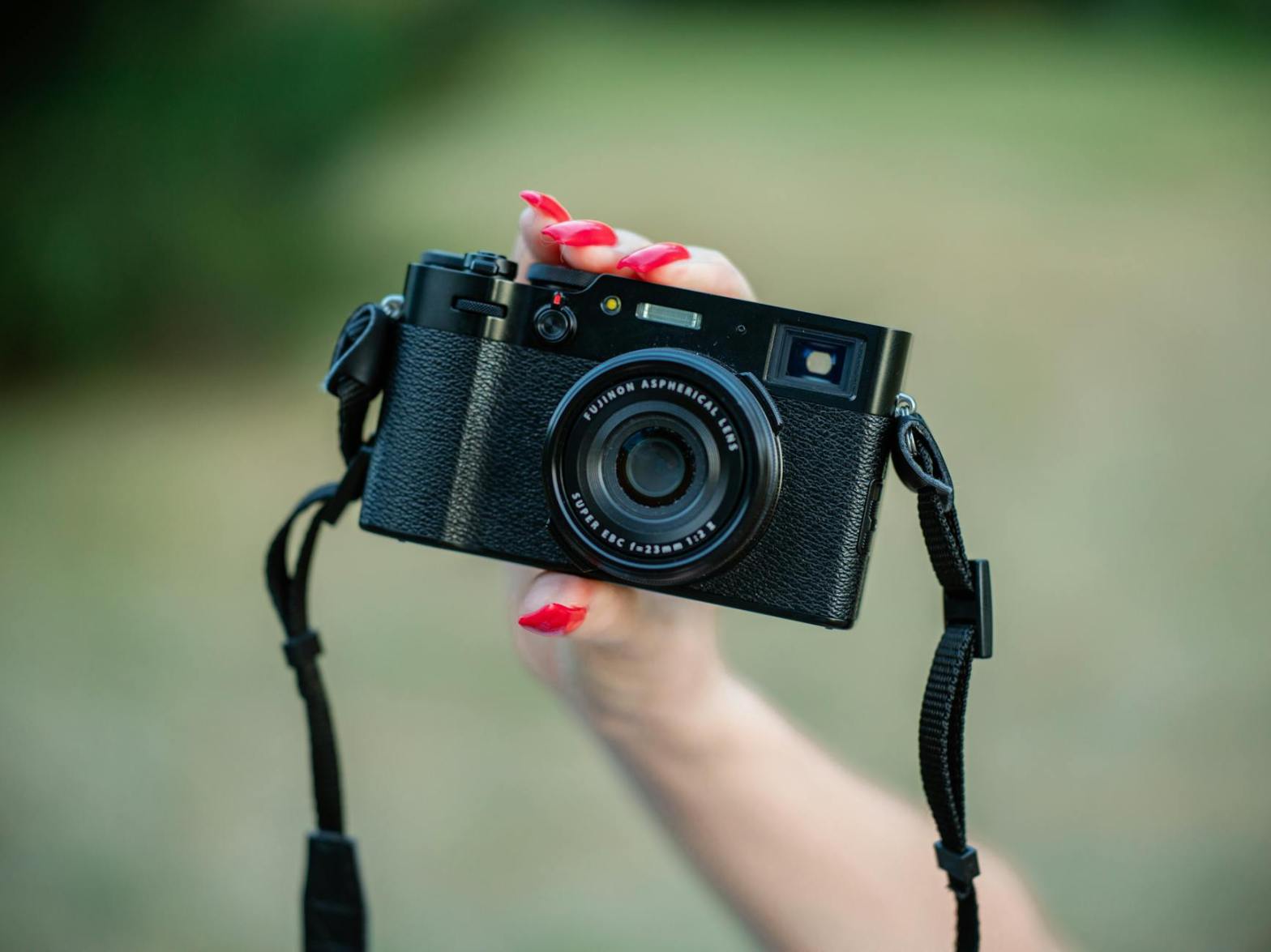
Compact cameras, also known as point-and-shoot cameras, have long been a popular choice for casual photographers and travelers due to their simplicity, convenience, and affordability. While smartphones have become dominant in everyday photography, compact cameras still hold a valuable place in the market, offering superior optics, dedicated camera features, and versatile shooting options.

Understanding Compact Cameras

Compact cameras are designed for users who want an easy-to-use camera without the bulk and complexity of DSLRs or mirrorless systems. These cameras feature built-in lenses, automatic shooting modes, and intuitive controls, making them ideal for beginners, families, and travelers looking for a reliable photographic tool.

Key Features of Compact Cameras

1. Portability and Convenience

One of the most significant advantages of compact cameras is their small size and lightweight build. Unlike DSLRs and mirrorless cameras that require separate lenses and accessories, compact cameras integrate everything into a single unit. This makes them ideal for:

  • Travelers who need a hassle-free camera that fits in a pocket or small bag.
  • Everyday photographers looking to capture moments without carrying bulky gear.
  • Children or beginners who need an easy-to-handle device.

2. Ease of Use

Compact cameras are designed with user-friendly interfaces, often featuring fully automatic modes that handle exposure, focus, and color balance. Some models also include:

  • Scene Modes: Preset options for different shooting environments, such as portraits, landscapes, and night photography.
  • Face and Smile Detection: AI-powered features that recognize faces and capture shots at the perfect moment.
  • Touchscreen Controls: Many modern compact cameras incorporate intuitive touchscreens for menu navigation and focus selection.

3. Integrated Lenses

Unlike interchangeable-lens cameras, compact cameras have built-in lenses with varying zoom ranges. These can include:

  • Fixed Prime Lenses: High-quality optics with a single focal length, ideal for street photography and low-light conditions.
  • Zoom Lenses: Offering versatility, zoom lenses allow users to switch between wide-angle and telephoto shots.
  • Superzoom Lenses: Some compact cameras feature impressive zoom capabilities, reaching up to 30x or more, making them perfect for wildlife and sports photography.

4. Affordability

Compact cameras tend to be more budget-friendly than DSLRs and mirrorless cameras. They offer a cost-effective way to achieve better image quality than most smartphone cameras while remaining accessible to a wide audience. Prices vary based on features, with basic models being highly affordable and premium compact cameras offering more advanced technology at a higher cost.

Considerations When Choosing a Compact Camera

1. Limited Manual Controls

While compact cameras excel in automation, they often lack full manual control options. This can be a drawback for photographers who want to experiment with aperture, shutter speed, and ISO settings. However, some high-end compact models do offer manual controls, giving users more creative flexibility.

2. Sensor Size and Image Quality

Compact cameras typically have smaller sensors compared to DSLRs and mirrorless cameras, which can affect image quality, especially in low-light conditions. Key aspects to consider include:

  • Sensor Type: Most compact cameras use either CCD or CMOS sensors, with CMOS generally providing better performance and energy efficiency.
  • Megapixels: While megapixel count is often emphasized in marketing, sensor size plays a more crucial role in determining image quality.
  • Low-Light Performance: Due to smaller sensors, compact cameras may struggle in dim environments, leading to more noise and reduced detail.

3. Zoom vs. Image Quality Trade-Off

Many compact cameras feature powerful zoom lenses, but this can sometimes compromise image quality, particularly at the highest zoom levels. Optical zoom maintains quality, while digital zoom simply enlarges the image, leading to potential pixelation and loss of detail.

4. Battery Life

Most compact cameras have decent battery life, but frequent use of the LCD screen, flash, and zoom can drain power quickly. To extend battery life:

  • Carry spare batteries for longer trips.
  • Use power-saving modes when available.
  • Turn off unnecessary features when not in use.

Who Should Consider a Compact Camera?

Compact cameras are ideal for various types of users, including:

  • Beginners: Those new to photography will appreciate the straightforward operation.
  • Casual Photographers: Users who want better image quality than a smartphone without the complexity of a larger camera.
  • Travelers: Lightweight and convenient, compact cameras are perfect for capturing moments on the go.
  • Families: Great for vacations, birthdays, and everyday snapshots.
  • Vloggers: Some compact cameras offer excellent video capabilities, including 4K recording and flip-out screens for self-recording.

The Evolution of Compact Cameras in the Smartphone Era

With smartphones now featuring advanced camera systems, compact cameras have had to evolve to stay relevant. Some ways they have adapted include:

  • Larger Sensors: High-end models incorporate larger sensors for superior image quality.
  • Wi-Fi and Bluetooth Connectivity: Many compact cameras now support wireless image transfer to smartphones and social media.
  • 4K Video and Slow-Motion Recording: To compete with smartphones, modern compact cameras offer advanced video features.
  • Rugged and Waterproof Designs: Some compact cameras cater to adventure enthusiasts with durable, waterproof builds for outdoor and underwater photography.

Future of Compact Cameras

While smartphone cameras continue to improve, compact cameras still offer unique advantages. Future advancements may include:

  • AI-Enhanced Photography: Smarter autofocus, scene recognition, and real-time enhancements.
  • Improved Optical Zoom: Higher zoom capabilities without sacrificing image quality.
  • Enhanced Low-Light Performance: Larger sensors and improved processing for better night shots.
  • Better Integration with Smart Devices: Seamless connectivity for instant sharing and cloud storage.

Conclusion

Compact cameras remain a valuable tool for photographers seeking a simple yet capable alternative to smartphones. Their portability, ease of use, and affordability make them an excellent choice for beginners, travelers, and casual shooters. While they may not offer the same level of manual control or image quality as high-end DSLRs and mirrorless cameras, advancements in technology continue to make compact cameras a compelling option for those looking for a dedicated photographic device without the complexity of larger systems.

Mirrorless Cameras

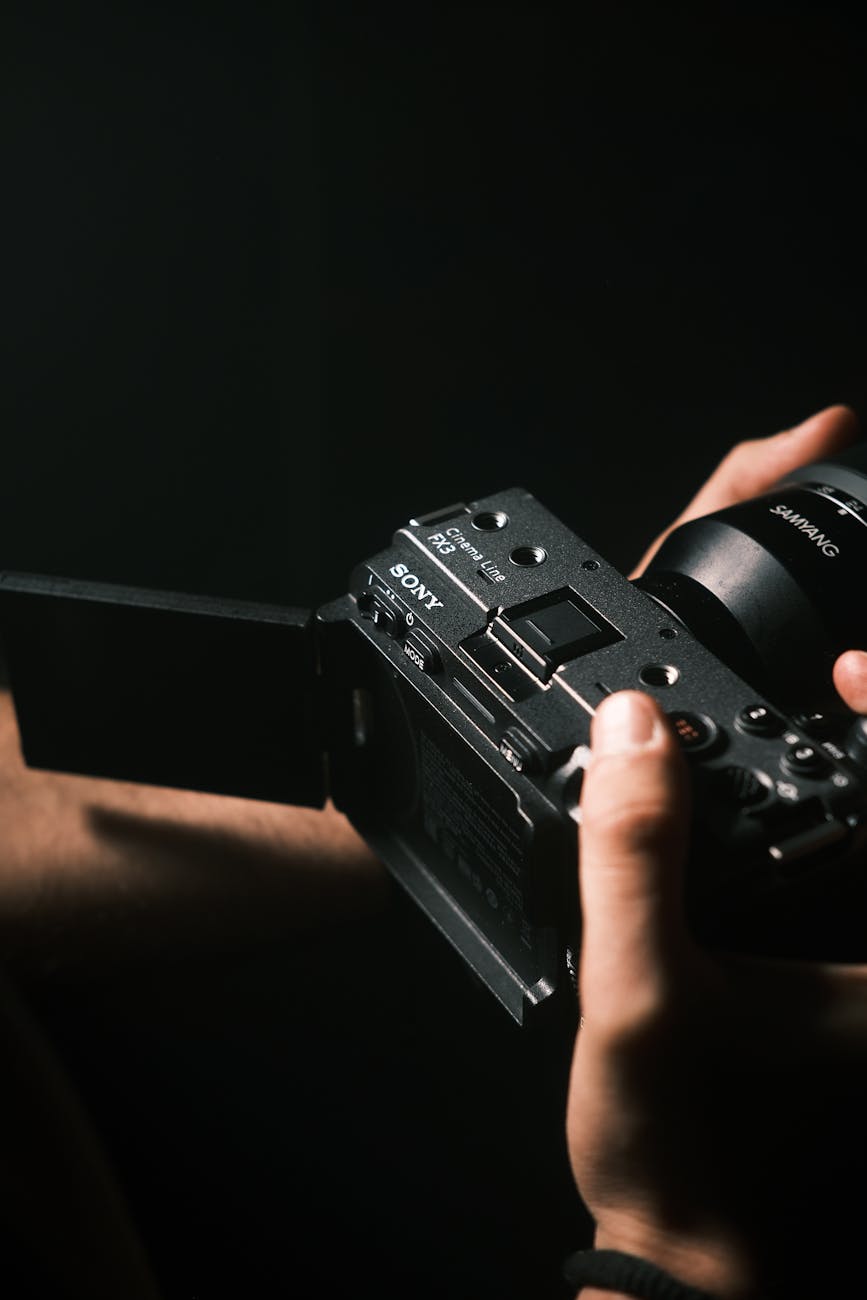
Mirrorless cameras have transformed the photography industry, offering a modern, lightweight alternative to traditional DSLRs. They eliminate the need for a mirror mechanism, which not only reduces their size and weight but also enables advanced digital features. This section delves into the advantages, technical specifications, and considerations when choosing a mirrorless camera, helping photographers of all levels understand why they might opt for this system.

Understanding the Mirrorless System

Unlike DSLRs, which rely on a mirror and optical viewfinder to preview images, mirrorless cameras use an electronic viewfinder (EVF) or an LCD screen to display a digital representation of the image. This allows photographers to see an accurate exposure preview, including real-time effects of settings like white balance, aperture, and shutter speed. This difference in viewing mechanism is at the heart of what makes mirrorless cameras distinct from DSLRs.

Key Features of Mirrorless Cameras

1. Compact and Lightweight Design

One of the biggest advantages of mirrorless cameras is their portability. Without a mirror box and optical prism, manufacturers can design smaller and lighter camera bodies while maintaining high image quality. This makes mirrorless cameras ideal for:

  • Travel photographers who need to carry their gear for long periods.
  • Street photographers who require discretion and quick access to their cameras.
  • Videographers who appreciate the reduced weight when mounting cameras on gimbals or stabilizers.

2. Electronic Viewfinder (EVF) and LCD Screen

Since mirrorless cameras lack an optical viewfinder, they rely on an electronic viewfinder (EVF) or LCD screen to compose shots. The benefits of an EVF include:

  • Real-Time Exposure Preview: See exactly how adjustments to ISO, shutter speed, and aperture will affect the final image before pressing the shutter.
  • Enhanced Visibility in Low Light: Unlike optical viewfinders that darken in low-light conditions, EVFs amplify available light, making it easier to frame shots in dim environments.
  • Focus Peaking and Zebra Stripes: Advanced features help with manual focusing and exposure control, ensuring precise results.

However, some photographers prefer the optical experience of a DSLR viewfinder, as EVFs can introduce a slight lag or drain battery life faster.

3. Interchangeable Lenses

Similar to DSLRs, mirrorless cameras support interchangeable lenses, offering versatility for different types of photography. Most major brands have developed extensive lens lineups, including:

  • Wide-Angle Lenses for landscape and architectural photography.
  • Prime Lenses for portraits with beautiful background blur.
  • Telephoto Lenses for wildlife and sports photography.
  • Macro Lenses for close-up details of small subjects.

Some mirrorless cameras also support lens adapters, allowing photographers to use their existing DSLR lenses, although this may add bulk and reduce autofocus performance.

4. Advanced Autofocus Systems

Mirrorless cameras have an edge over DSLRs in autofocus technology, particularly in continuous tracking and face/eye detection. They utilize:

  • Phase Detection and Contrast Detection: Many models combine these technologies for faster and more accurate focusing.
  • Eye Autofocus (Eye AF): Detects and locks onto a subject’s eyes, crucial for portrait and wildlife photography.
  • Superior Video Autofocus: Mirrorless cameras excel at subject tracking in video mode, making them popular among content creators and vloggers.

5. High-Quality Video Capabilities

Videographers favor mirrorless cameras for their advanced video features. Many offer:

  • 4K and Even 8K Recording: Crisp, high-resolution footage.
  • In-Body Image Stabilization (IBIS): Reduces camera shake for smooth handheld shots.
  • Log Profiles and RAW Video: Greater flexibility in post-production color grading.

These features make mirrorless cameras the go-to choice for independent filmmakers and YouTubers.

Considerations When Choosing a Mirrorless Camera

1. Battery Life

Since mirrorless cameras rely on digital screens and EVFs, they consume more power than DSLRs. Battery life varies by model, but here are ways to mitigate power concerns:

  • Carry spare batteries for extended shoots.
  • Use power-saving modes and turn off the LCD when not in use.
  • Invest in external battery grips for professional work.

2. Lens Selection and Compatibility

While mirrorless systems have expanded their native lens offerings, some brands still lag behind the extensive lens options available for DSLRs. However, companies like Sony, Canon, Nikon, and Fujifilm continue to release high-quality mirrorless lenses, and third-party manufacturers such as Sigma and Tamron have also entered the market.

3. Price and Investment

Mirrorless cameras range from budget-friendly entry-level models to high-end professional systems. When considering the switch to mirrorless, photographers should factor in:

  • The cost of additional lenses and accessories.
  • Potential need for new memory cards (such as CFexpress for high-speed shooting).
  • Whether their existing DSLR accessories, such as flashes and remote triggers, are compatible.

4. Durability and Weather Sealing

Professional-grade mirrorless cameras often include weather sealing to protect against dust and moisture. For outdoor and adventure photographers, models with magnesium-alloy bodies and robust sealing are recommended.

Who Should Choose a Mirrorless Camera?

Mirrorless cameras cater to a wide range of photographers, including:

  • Beginners: Compact models with intuitive controls make for an excellent first camera.
  • Enthusiasts: Those looking to upgrade from smartphones or compact cameras will enjoy the enhanced image quality and creative control.
  • Professionals: High-end mirrorless cameras now rival and even surpass DSLRs in performance, making them suitable for commercial and studio work.
  • Videographers: With superior autofocus, stabilization, and 4K/8K capabilities, mirrorless cameras are the preferred choice for filmmakers and vloggers.

The Future of Mirrorless Cameras

The industry is rapidly shifting toward mirrorless technology, with major brands prioritizing research and development in this area. Future advancements may include:

  • Better Battery Life: Improved efficiency and higher-capacity batteries.
  • More Affordable Options: As technology advances, entry-level mirrorless models will become more accessible.
  • Enhanced AI Autofocus: Even smarter subject tracking and recognition.

Conclusion

Mirrorless cameras offer a compelling alternative to DSLRs, blending portability with cutting-edge technology. Whether you’re a beginner looking for a lightweight travel companion or a professional seeking top-tier performance, the mirrorless system provides a versatile and future-proof solution. Understanding their features and limitations can help you make an informed decision, ensuring you invest in the right camera for your photographic journey.