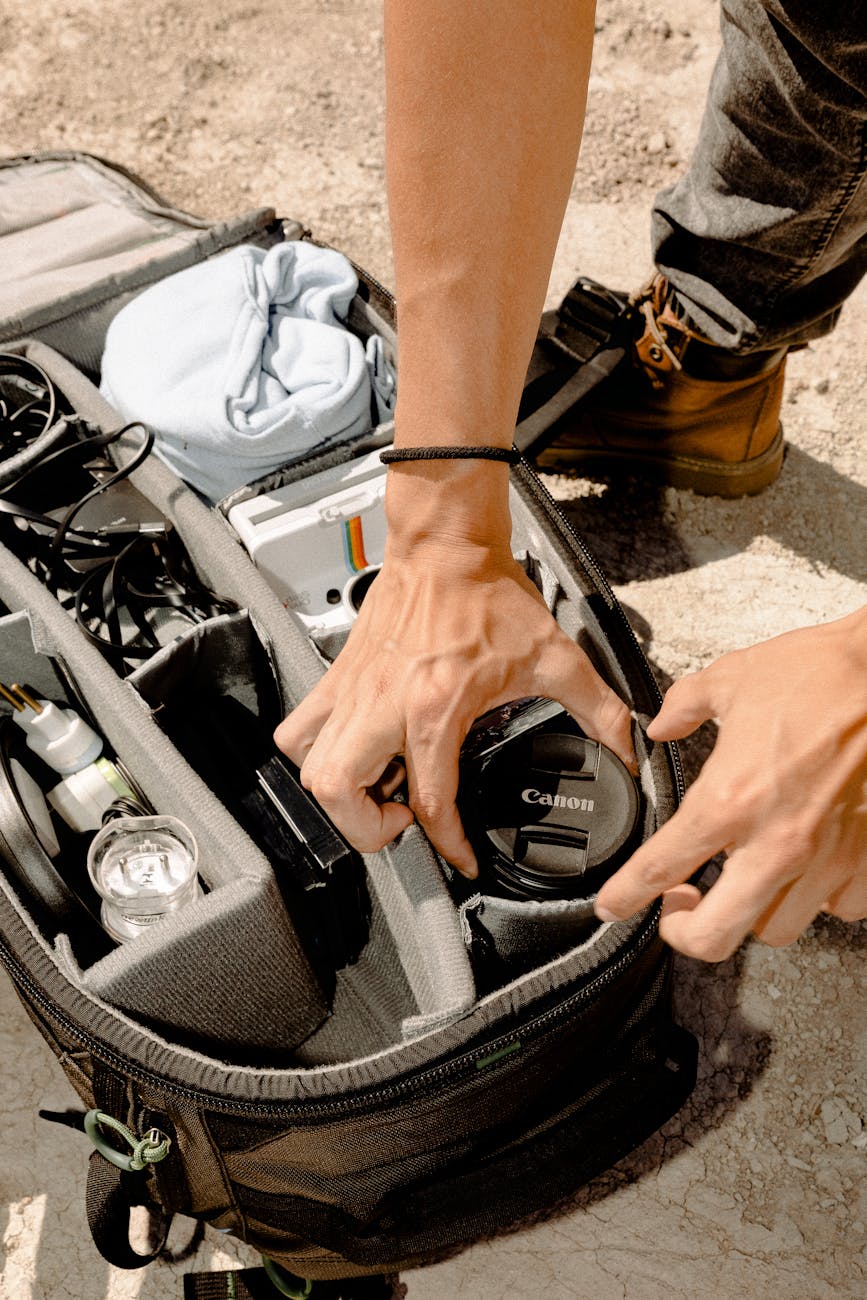
A reliable camera bag is essential for protecting your gear, ensuring ease of transport, and providing quick access to your equipment when needed. Whether you are a professional photographer carrying multiple cameras and lenses or a hobbyist with a compact setup, selecting the right bag depends on your shooting style, the amount of gear you carry, and the level of protection required.
Popular Options
Backpacks
Camera backpacks are excellent for photographers who need to carry multiple lenses, accessories, and even a tripod over long distances. They distribute weight evenly across both shoulders, making them comfortable for extended use.
Features:
- Padded compartments for multiple cameras and lenses
- Adjustable dividers for customizable organization
- Additional pockets for accessories such as memory cards, batteries, and filters
- Tripod holders and external straps for extra gear
- Water-resistant or weatherproof materials for outdoor shooting
Best For:
- Landscape photographers who hike to remote locations
- Travel photographers needing a hands-free carrying option
- Event photographers requiring extra storage for accessories
Shoulder Bags
Shoulder bags provide quick access to your camera and lenses, making them ideal for street and event photography. They allow easy switching between gear without needing to remove the bag from your body.
Features:
- Single shoulder strap for easy carrying
- Quick-access flap for fast lens or camera swaps
- Compact design suitable for urban environments
- Padded compartments for protection
- Adjustable dividers to organize equipment
Best For:
- Street photographers who need to move quickly
- Event photographers needing easy access to lenses and accessories
- Photojournalists working in fast-paced environments
Sling Bags
Sling bags offer a hybrid design between backpacks and shoulder bags. They feature a single cross-body strap, allowing for easy rotation from back to front for quick gear access. They balance convenience and capacity, making them a versatile choice.
Features:
- Cross-body strap for comfortable carrying
- Quick side-access compartments
- Adjustable dividers for organization
- Lightweight design compared to backpacks
- Padded sections for added protection
Best For:
- Travel photographers needing quick access to gear
- Street photographers who prefer a compact yet spacious option
- Hobbyists and vloggers who carry a moderate amount of equipment
Hard Cases
Hard cases provide the highest level of protection for camera gear, making them a preferred choice for professional photographers traveling with expensive equipment. These cases are built to withstand extreme conditions, offering impact resistance and water protection.
Features:
- Hard-shell exterior for impact protection
- Foam inserts for secure equipment placement
- Waterproof and dustproof seals
- Lockable latches for security
- Wheels and handles for easy transport
Best For:
- Professional photographers traveling with high-end gear
- Videographers needing secure storage for delicate equipment
- Studio photographers transporting lighting and camera setups
Additional Considerations
Material and Durability
A camera bag’s material determines its durability, weight, and weather resistance. Common materials include:
- Nylon: Lightweight and water-resistant, ideal for travel.
- Canvas: Durable and stylish but heavier than synthetic materials.
- Leather: Offers a premium look and durability but requires maintenance.
- Hard Plastic: Provides maximum protection against shocks and impacts.
Size and Capacity
Choosing the right size depends on the number of cameras, lenses, and accessories you plan to carry. Consider:
- Small bags: Best for compact cameras and a single lens.
- Medium bags: Ideal for carrying a camera body with two or three lenses.
- Large bags: Suitable for professional setups with multiple cameras, lenses, and accessories.
Comfort and Ergonomics
Comfort is crucial, especially for photographers who travel or shoot for extended periods. Look for:
- Padded shoulder straps: Reduces strain on your shoulders and back.
- Breathable back panels: Prevents overheating during long wear.
- Adjustable straps: Helps distribute weight evenly for better support.
Security Features
Protecting your expensive gear from theft is essential, especially when traveling. Security features to consider include:
- Lockable zippers: Prevent unauthorized access.
- Hidden compartments: Provide discreet storage for valuables.
- Anti-theft straps: Prevent slash-and-grab theft attempts.
Weather Protection
For outdoor and travel photographers, weather resistance is a key consideration. Features to look for:
- Water-resistant coatings: Helps repel light rain and moisture.
- Rain covers: Provide extra protection in heavy downpours.
- Sealed zippers: Prevent water from seeping into compartments.
Versatility and Expandability
Many photographers need bags that can adapt to different shooting conditions. Look for:
- Modular designs: Allow you to add or remove compartments.
- Expandable compartments: Provide extra storage when needed.
- Convertible designs: Some bags switch between backpack, sling, and shoulder configurations.
Choosing the Right Camera Bag for Your Needs
Selecting the best camera bag depends on your photography style and specific needs. Here are some recommendations based on different scenarios:
- For Travel Photography: A lightweight, durable travel backpack with weatherproofing and security features.
- For Street Photography: A compact shoulder or sling bag for quick access to your gear.
- For Wildlife Photography: A large backpack with extra padding and multiple compartments.
- For Studio and Professional Work: A hard case with foam inserts for maximum protection.
- For Vlogging and Content Creation: A medium-sized sling bag with space for a camera, microphone, and small tripod.
Investing in a high-quality camera bag ensures that your equipment stays protected, organized, and easy to access. By considering factors such as size, material, security, and comfort, you can find the perfect camera bag that fits your photographic needs and enhances your shooting experience.
 Learning Digital Photography