Understanding the DSLR Advantage
At the heart of a DSLR’s functionality is its mirror mechanism, which reflects light from the lens into an optical viewfinder. This means that what you see through the viewfinder is exactly what your lens captures, providing a true-to-life perspective crucial for precise composition.
Key Features That Enhance Learning
- Interchangeable Lenses One of the standout advantages of DSLRs is their ability to switch between a variety of lenses. Whether you’re capturing sweeping landscapes with a wide-angle lens, zooming in on distant subjects with a telephoto lens, or experimenting with macro photography, the flexibility is unmatched. This feature allows beginners to experiment and develop an understanding of focal lengths and composition techniques. Major brands like Canon, Nikon, and Sony offer extensive lens ecosystems, ensuring photographers have the right tools for every situation. Canon’s EF and RF lenses, Nikon’s F-mount and Z-mount lenses, and Sony’s A-mount lenses all provide a range of options for different types of photography.
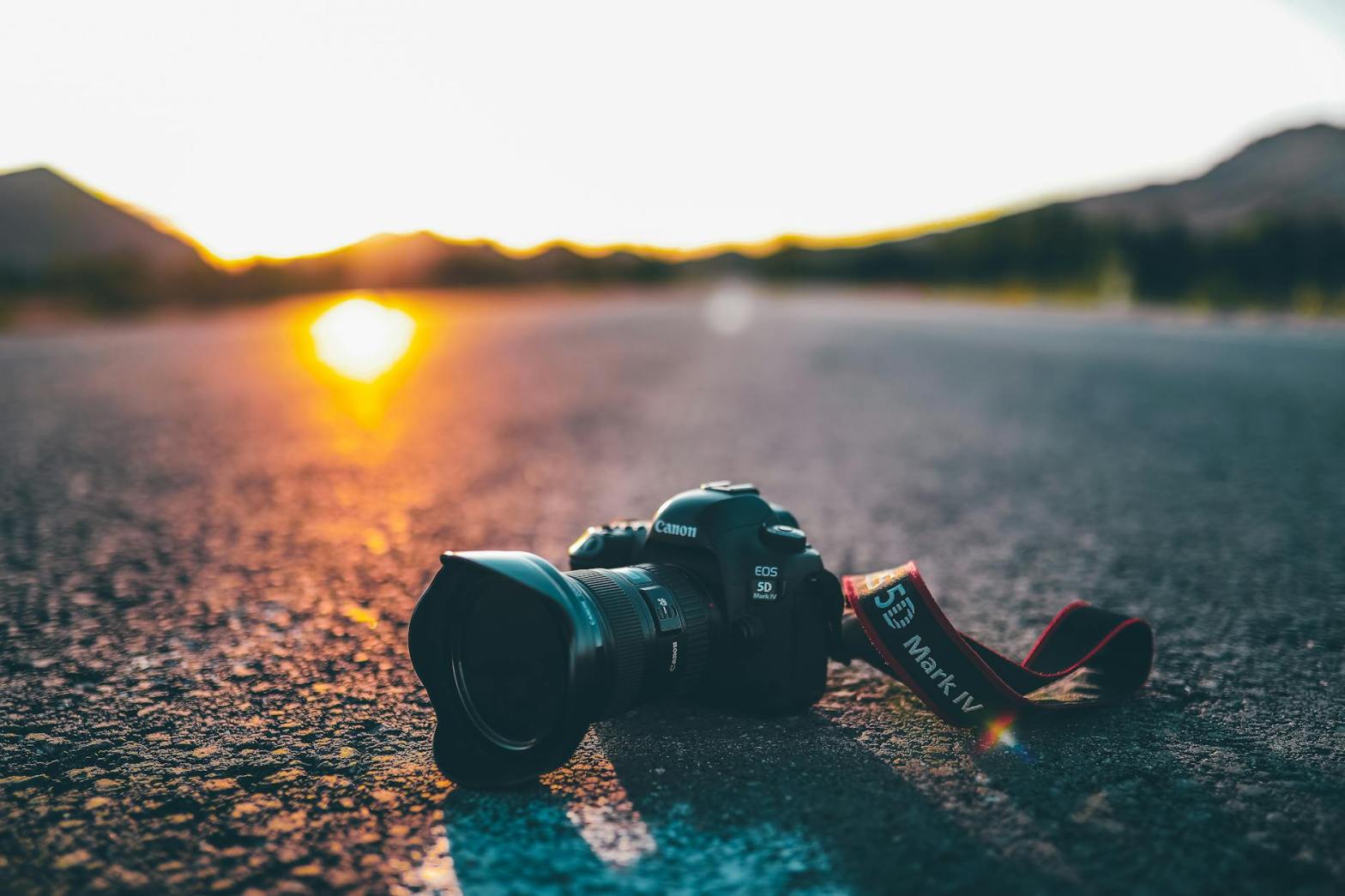
- Superior Image Quality DSLRs are equipped with large sensors, typically APS-C or full-frame, which means they can capture high-resolution images with excellent detail, dynamic range, and low-light performance. The ability to shoot in RAW format allows for extensive post-processing, giving photographers full control over color grading and exposure adjustments. Some notable DSLR models include the Canon EOS 5D Mark IV, Nikon D850, and Pentax K-1 II, all of which are praised for their outstanding image quality and professional features.
- Manual Control for Skill Development Unlike point-and-shoot cameras or smartphones, DSLRs offer complete control over settings such as aperture, shutter speed, and ISO. Mastering these settings helps photographers understand exposure, motion blur, and depth of field—key fundamentals in digital photography. Beginners can start with semi-automatic modes like Aperture Priority (Av/A) and Shutter Priority (Tv/S) before transitioning to full manual mode. This gradual progression helps users gain confidence and refine their creative control over their images.
- Optical Viewfinder for Real-Time Composition The optical viewfinder (OVF) in DSLRs provides a real-time, lag-free view of the scene, unlike mirrorless cameras that rely on electronic viewfinders (EVFs). This makes DSLRs particularly advantageous in bright outdoor conditions where electronic screens might suffer from glare.
- Durability and Longevity Many DSLRs are built to withstand challenging environments. Weather-sealed bodies and rugged designs make them suitable for outdoor adventures, allowing learners to practice in diverse conditions without worrying about damage from dust or moisture. Brands like Canon and Nikon are known for their durable DSLR models, with cameras like the Nikon D6 and Canon EOS-1D X Mark III built to handle extreme professional use.
Pros and Cons of DSLRs
| Pros | Cons |
|---|---|
| Superior image quality due to large sensors | Bulky and heavier compared to mirrorless cameras |
| Interchangeable lenses offer versatility | Steeper learning curve for beginners |
| Manual control for better creative control | Typically more expensive than compact cameras |
| Optical viewfinder provides real-time preview | Autofocus in live view mode is slower than mirrorless |
| Long battery life compared to mirrorless cameras | Limited video capabilities in some models |
| Durable and weather-sealed models available | Can be intimidating due to numerous buttons and settings |
Overcoming the Learning Curve
Despite their advantages, DSLRs come with certain challenges, particularly for beginners. Here’s how to navigate them:
- Managing Size and Weight: Unlike compact mirrorless cameras or smartphones, DSLRs tend to be bulkier. Investing in a comfortable camera strap and a quality bag can make carrying them easier. Some photographers opt for crop-sensor (APS-C) DSLRs like the Canon EOS 90D or Nikon D7500 for a balance of portability and performance.
- Understanding Controls and Features: The vast number of settings and buttons may seem daunting at first. A good approach is to start with semi-automatic modes before transitioning to full manual control. Online tutorials, photography books, and camera-specific user guides can also be valuable resources.
- Post-Processing and Editing: To fully harness a DSLR’s capabilities, learning post-processing software such as Adobe Lightroom or Photoshop is beneficial. RAW files provide flexibility in exposure, color correction, and sharpness adjustments.
Comparing DSLRs to Mirrorless Cameras
In recent years, mirrorless cameras have gained popularity due to their compact design and advanced autofocus systems. However, DSLRs still hold an edge in certain areas:
- Battery Life: DSLRs generally have longer battery life due to the optical viewfinder using less power compared to mirrorless electronic viewfinders.
- Lens Compatibility: Many photographers already own a collection of DSLR lenses, and adapting them to mirrorless systems can be cumbersome.
- Optical Viewfinder Advantage: Some photographers prefer the real-time, lag-free viewing experience of an optical viewfinder.
That said, brands like Sony, Canon, and Nikon have been advancing their mirrorless technology, with models such as the Sony A7 IV, Canon EOS R5, and Nikon Z9 leading the market.
Tips for Choosing Your First DSLR
When selecting a DSLR as a beginner, consider the following:
- Budget: Entry-level models like the Canon Rebel T8i or Nikon D5600 offer excellent features at an affordable price.
- Sensor Size: APS-C sensors provide a good balance between affordability and performance, while full-frame sensors offer the best image quality but at a higher cost.
- Lens Availability: Ensure that the brand you choose has a diverse range of lenses for future growth.
- Intended Use: Portrait, landscape, sports, and wildlife photography all have different lens and camera body requirements.
Conclusion
While the learning curve may be steep, mastering a DSLR is a rewarding journey that equips photographers with the tools to capture stunning images. With patience, practice, and an eagerness to explore, beginners can harness the full potential of a DSLR and take their photography skills to new heights.
Whether choosing a Canon, Nikon, Pentax, or Sony DSLR, the key to success lies in continuous learning, hands-on experimentation, and a passion for storytelling through images.

 Learning Digital Photography